STRATEGIC OVERVIEW
Strategic Roadmap 1. The Invisible Threat: How Shadow AI Disrupts the 2026 Perimeter 2.
Strategic Roadmap
- The Invisible Threat: How Shadow AI Disrupts the 2026 Perimeter
- What is Shadow AI? (Discovery & Lifecycle)
- The Regulatory Surge: EU AI Act & Global Mandates
- Architecture: The Transparent Governance Proxy
- Step-by-Step: Implementing Runtime Redaction
- Agentic Governance: Guardrails for Autonomous LAMs
- Deep Analysis: Governance Frameworks (NIST vs. EU AI Act)
- Pitfalls & Modern AI Anti-Patterns
- Futuristic Horizon: 2027-2030 Roadmap
- FAQ: Strategic Governance Intelligence
The Invisible Threat: How Shadow AI Disrupts the 2026 Perimeter
In the early 2020s, "Shadow IT" referred to employees using personal SaaS accounts. In 2026, the threat has mutated into Shadow AI—the unsanctioned use of Large Language Models (LLMs) and autonomous agents that operate entirely outside corporate security protocols.
Every time an engineer prompts a "free" model with proprietary code, or a marketing specialist uploads a list of customer emails to a non-enterprise agent for analysis, your corporate perimeter is effectively bypassed. The "Perimeter" is no longer a set of IPs or a VPN; it is the Semantic Axis where your data meets external reasoning engines.
What is Shadow AI?
Shadow AI is the delta between the AI tools your organization has officially sanctioned and the actual models your employees are using to stay competitive.
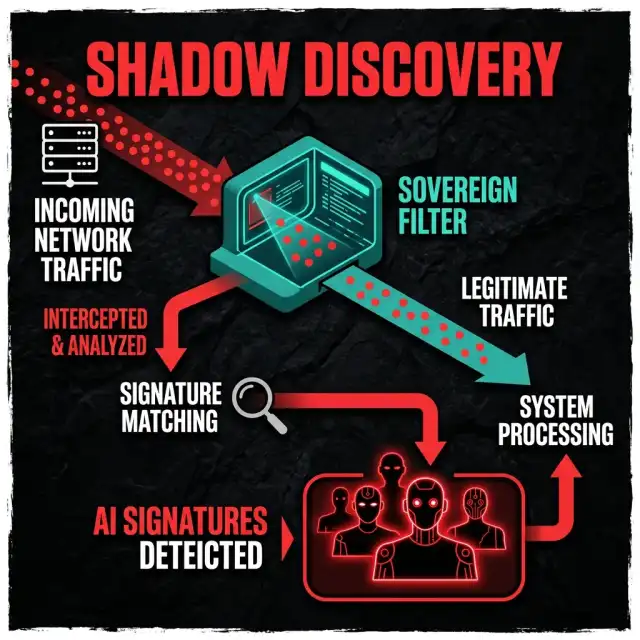
The Shadow AI Taxonomy
- Unsanctioned Models: Personal subscriptions to GPT-5, Claude 4, or Llama 4.
- Embedded AI: Browser extensions, IDE plugins, and design tools that quietly exfiltrate context to third-party servers.
- Hidden Agents: Autonomous workflows created on "no-code" platforms that act as localized action controllers without audit trails.
Practitioner Insight: The 'Hidden Gems' Filter
During a recent infrastructure audit for a global FinTech client, we discovered that over 40% of their "Shadow AI" traffic was coming from browser plugins designed for "meeting summarization." These tools were recording and transcribing high-security strategic sessions and sending them to an offshore startup with zero encryption. Discovery is the first pillar of sovereignty.
The Regulatory Surge: EU AI Act & Global Mandates
The era of "Wild West AI" ends in August 2026.
The enactment of the EU AI Act marks the transition from ethics to enforcement. Organizations operating within the EU (or dealing with EU citizens) must now provide absolute Auditability & Traceability for high-risk AI systems. Failure to comply can result in fines of up to 7% of global turnover—a figure that dwarf even the GDPR's penalties.
The Global Alignment
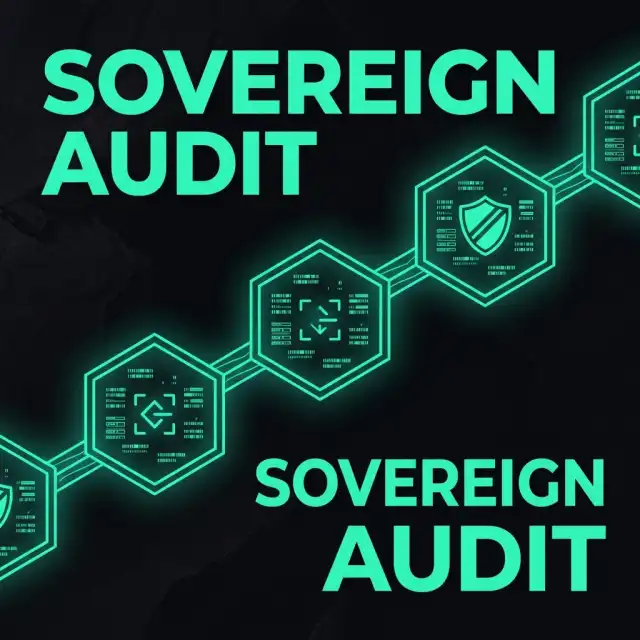
While the EU is leading, the NIST AI Risk Management Framework (RMF) and the US Executive Orders have converged on a single standard: Audit-First AI Architecture. This means every prompt, every response, and every external API call must be logged in an immutable ledger to prove that no PII, secrets, or biased logic have been processed.

Architecture: The Transparent Governance Proxy
To solve Shadow AI, we must stop it at the Network Layer.
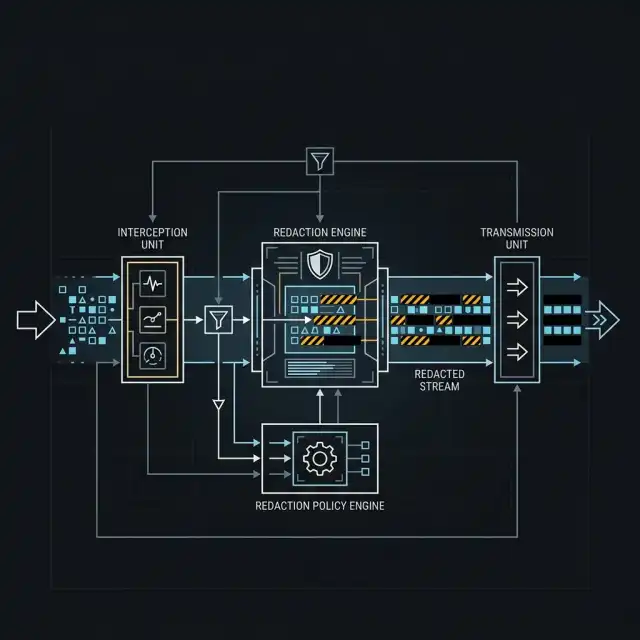
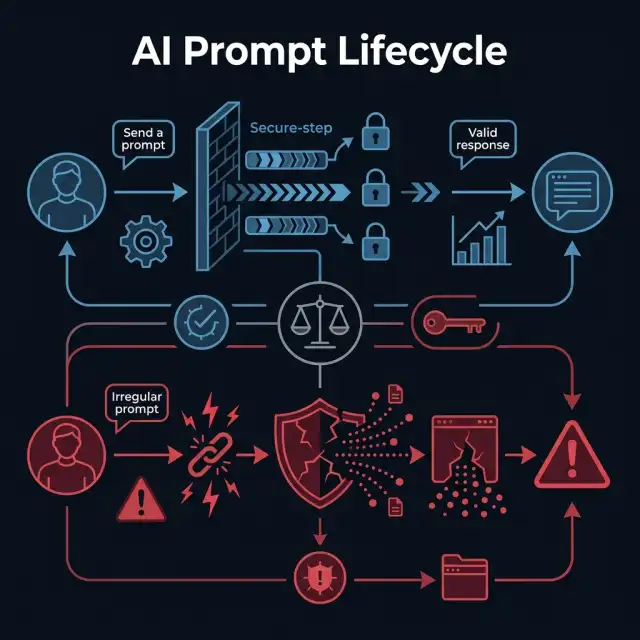
The "Transparent Governance Proxy" is an inline security gateway that intercepts all AI-bound traffic. It does not just block or allow; it inspects and transforms.
Core Components
- Model Discovery Engine: Fingerprints outbound traffic to identify "Shadow" AI endpoints that try to hide within standard HTTPS traffic.
- PII/Secret Detector: Utilizes high-performance Small Language Models (SLMs) to scan prompts for social security numbers, API keys, and proprietary code in real-time.

- Redaction Layer: Automatically replaces sensitive data with anonymous placeholders (e.g., "[REDACTED_EMAIL]") before the prompt reaches the external LLM.
- Audit Ledger: Commits the original prompt, the redacted prompt, and the external response to a secure, tamper-proof database.
Step-by-Step: Implementing Runtime Redaction
Implementing a governance proxy requires a "Zero-Trust" approach to semantic data.
PHASE 1 Traffic Interception
Deploy a network-level interceptor (using a Secure Web Gateway or Enterprise Browser) that routes all .openai.com, .anthropic.com, and *.together.ai traffic through your internal proxy.
PHASE 2 Semantic Analysis
Pass the raw prompt through a specialized "Safety SLM" (like Phi-3.5 Mini or Llama 3.2 1B) trained specifically for redaction.
PHASE 3 The Scrubbing Cycle
Example logic for a simple redaction middleware:
def govern_prompt(raw_prompt):
    # Detect PII/Secrets using local regex + SLM evaluation
    sensitive_fragments = detect_sensitive_data(raw_prompt)

    # Redact
    scrubbed_prompt = raw_prompt.replace(sensitive_fragments, "[REDACTED]")

    # Log to Audit Ledger
    log_transaction(original=raw_prompt, scrubbed=scrubbed_prompt)

    return scrubbed_prompt
Agentic Governance: Guardrails for Autonomous LAMs
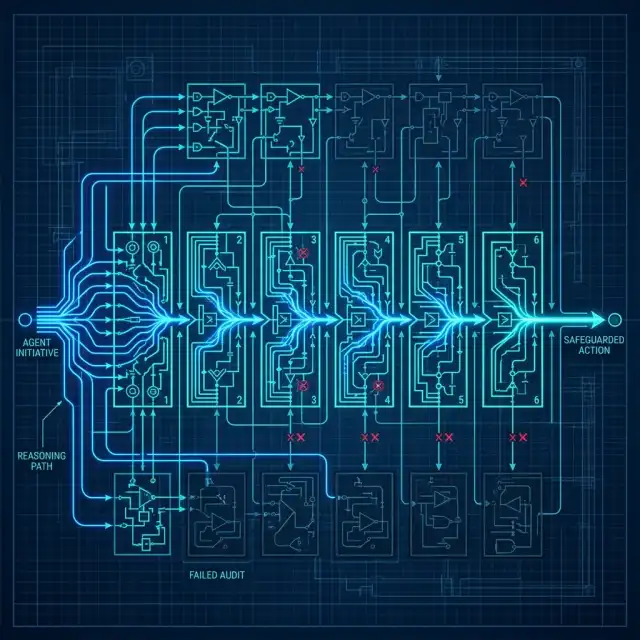
In 2026, we are no longer just governing chat prompts—we are governing Action Controllers (LAMs).
Unlike standard LLMs, autonomous agents can perform actions: book flights, delete database rows, or email clients. Governance for agents must include Reasoning Path Auditing. Before an agent is allowed to execute a localized action, the proxy must evaluate the agent's "Plan" and cross-reference it against the corporate Policy Mesh.
Deep Analysis: Governance Frameworks (NIST vs. EU AI Act)
To ground your choice, here is a comparative analysis of the primary governance frameworks dominating the 2026 enterprise.
| Framework | Primary Focus | Enforcement Rank | Ideal Use Case |
|---|---|---|---|
| EU AI Act (August 2026) | High-Risk Safety & Auditability | Critical (Global Penalties) | Enterprises with EU exposure |
| NIST AI RMF 2026 | Risk-Informed Innovation | Strategic (Standardized) | US Federal & Enterprise baseline |
| ISO/IEC 42001 | AI Management Systems (AIMS) | High (Certified Trust) | Supply chain & B2B vendors |
| OWASP LLM Top 10 | Pure Security & Vulnerability | Technical (Standard) | Security & DevOps teams |
Pitfalls & Modern AI Anti-Patterns
- The Redaction Lag: Using a cloud-based model to scrub another cloud-based model creates massive latency. Solution: Use local SLMs for redaction.
- Over-Blocking: Blocking all AI use cases drives Shadow AI further underground. Solution: Implement "Soft-Guardrails" that allow usage but enforce redaction.
- Log Leakage: Storing unredacted "Original Prompts" in your audit logs without absolute encryption creates a new "Target for Hackers." Solution: Encrypt logs with your own Sovereign keys.
Futuristic Horizon: 2027-2030 Roadmap
- 2027: Predictive Governance: Security models will predict intent and block high-risk prompt sequences before they are even completed.
- 2028: Multi-Cloud Governance Mesh: Unified dashboards that federate governance across Azure, AWS, and GCP AI stacks automatically.
- 2030: Sovereign Self-Auditing Models: Private enterprise models that are "Audit-Aware" by design, natively preventing PII leakage without external proxies.
FAQ: Strategic Governance Intelligence
Is the EU AI Act applicable to US-only companies?
If your AI system is used in the EU, or the output of your AI system is used in the EU, you are likely within scope. In 2026, most major US enterprises are choosing to comply with the EU AI Act as their "Global Baseline" for safety.
How do we detect Shadow AI that uses VPNs or encrypted tunnels?
You can't rely on simple IP blocking. You must use Endpoint Discovery—browser extensions and device-level monitoring that identify unsanctioned tool usage before the traffic even leaves the employee's machine.
Does every prompt really need to be stored?
For high-risk categories defined by the EU AI Act, yes. You must be able to reconstruct the reasoning chain in the event of an audit or a catastrophic failure.
How does a Transparent Proxy handle "Prompt Injection"?
By treating the prompt as an "Untrusted Input" and running it through an "Injection Filter" (like Garak or specialized Safety SLMs) that looks for malicious command structures before they reach the reasoning engine.
Can't we just block ChatGPT and call it a day?
No. Blocking one tool just shifts the Shadow AI to the next one (Claude, Mistral, etc.). A "World-Class" strategy involves Sovereign Provisioning—providing a sanctioned, governed alternative that is so good that employees have no need for unsanctioned tools.
Closing the Loop
Shadow AI is not a technical failure; it is an Architectural Opportunity. By building a Transparent Governance Mesh today, you are not just checking a compliance box for the EU AI Act—you are building the foundational "Secure Axis" upon which all future autonomous intelligence will run.
Ready to harden your AI Perimeter? Connect with Vatsal Shah on LinkedIn to architect your Audit-Ready infrastructure.
Additional Intelligence Assets


