
STRATEGIC OVERVIEW
EU AI Act Implementation Playbook — GPAI, Agents, and High-Risk Systems from Inventory to Evidence By Vatsal Shah · 2026-05-31 · AI Governance / Regulatory Table of Contents 1. Chapter 1: Regulatory Landscape & Timelines 2. Chapter 2: Classification Engine 3.
EU AI Act Implementation Playbook — GPAI, Agents, and High-Risk Systems from Inventory to Evidence
By Vatsal Shah · 2026-05-31 · AI Governance / Regulatory
Table of Contents
- Chapter 1: Regulatory Landscape & Timelines
- Chapter 2: Classification Engine
- Chapter 3: Technical Controls Library
- Chapter 4: Agent & Automation Annex
- Chapter 5: Evidence Packs & Audit Readiness
- Key Takeaways & FAQ
*\n\n## Chapter 1: Regulatory Landscape & Timelines
1.1 The Enforcement Horizon: August 2026 vs. December 2027 Scenarios
Operating an enterprise AI strategy in 2026 means moving beyond experimental sandboxes and entering the era of strict regulatory accountability. The European Union Artificial Intelligence Act (EU AI Act), which officially entered into force in August 2024, is now rolling out its primary enforcement waves. For engineering leaders and project managers, understanding these timelines is not an academic exercise—it is a critical architectural dependency. What we design today dictates our operational liability tomorrow.
The first major milestone hits on August 2, 2026. This date marks the hard enforcement of rules governing General Purpose AI (GPAI) models. GPAI models—which include foundational large language models (LLMs), multimodal models, and autonomous agent frameworks—must comply with strict requirements regarding technical documentation, copyright compliance, systemic risk evaluations, and transparency declarations. If you are deploying an agentic system that uses a GPAI model to write code, analyze data, or interact with customers, your model provider must have their compliance documentation verified by the EU AI Office, and you as the deployer must log and trace all model inputs, outputs, and parameters.
The second major milestone is scheduled for December 2, 2027. This date marks the enforcement of rules governing high-risk AI systems classified under Annex III. These systems directly impact human lives, safety, or fundamental rights. Examples include AI used in critical infrastructure management, education grading, employment screening, access to essential public and private services (such as credit scoring and insurance underwriting), law enforcement, and migration controls. Systems in these categories must undergo conformity assessments, implement continuous logging, maintain human-in-the-loop (HITL) overrides, and establish post-market monitoring frameworks.
The gap between August 2026 and December 2027 represents a critical window. I've seen organizations treat the 2027 deadline as a reason to delay compliance preparation. This is a severe operational anti-pattern. Setting up the infrastructure for continuous logging, logging audit trails, and training humans to act as effective supervisors takes months of architectural hardening. Waiting until mid-2027 to implement these controls ensures that your systems will not be ready for audit, resulting in immediate regulatory violations and potential service shutdowns.
1.2 The Omnibus Proposal Caveats: Shifts in Timeline Boundaries
To make matters more complex, regulatory timelines are not static. In May 2026, the European Parliament introduced provisional adjustments under the Digital Omnibus AI Act proposal. These Omnibus caveats aim to synchronize compliance timelines across member states and close loopholes regarding shadow AI deployments.
What actually happens in many engineering teams is a complete misunderstanding of these adjustments. Developers assume that provisional timeline shifts give them more time. The reality is the opposite: the Omnibus proposal pulls forward the documentation obligations for legacy AI systems. If a legacy model—previously deployed before August 2024—undergoes a significant update or configuration change after August 2026, it loses its grandfathered status and must comply immediately with GPAI rules.
For project managers, this means that simple model upgrades or fine-tuning runs on existing systems trigger immediate compliance events. You cannot simply swap an older model for a newer, fine-tuned variant without updating your technical documentation, running a new risk assessment, and updating your model registry. The Omnibus caveats mandate that any model change that alters the system's performance boundaries or context window classifies as a "significant modification," necessitating a full compliance review.
1.3 Risk Classification Framework: Prohibited to Minimal Risk
The EU AI Act classifies AI systems into four distinct risk tiers. As a principal architect, I advise teams to build a programmatic classification engine at the entrypoint of their AI platform to automatically route requests based on these tiers.
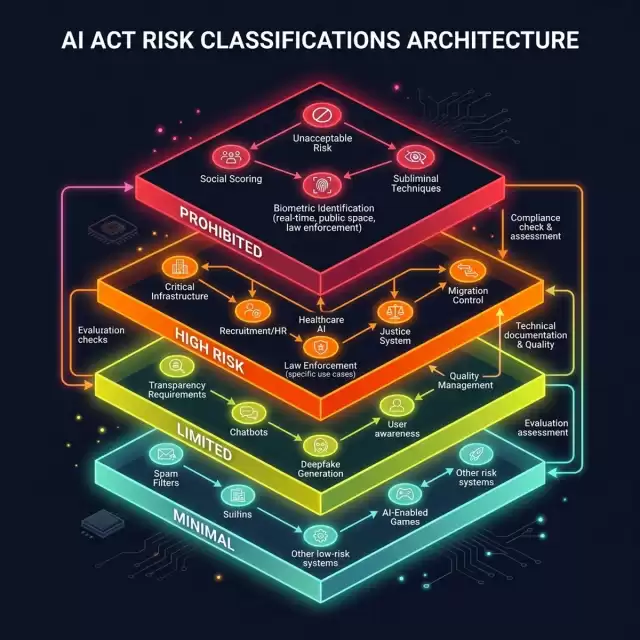
1. Prohibited AI Systems (Article 5)
These systems are completely banned within the EU because they present unacceptable risks to human safety and rights. Examples include:
- Cognitive behavioral manipulation (e.g., voice-activated toys that encourage dangerous behavior in children).
- Untargeted scraping of facial images from the internet or CCTV footage to create facial recognition databases.
- Emotion recognition systems in workplaces and educational institutions.
- Social scoring systems operated by public authorities or private entities that lead to unfavorable treatment of individuals.
- Biometric categorization systems that use sensitive data (e.g., political opinions, sexual orientation, religious beliefs).
2. High-Risk AI Systems (Annex III)
These systems are permitted but are subject to strict compliance obligations and conformity assessments. If your system is categorized here, you must implement the full technical controls library described in Chapter 3. High-risk systems include:
- AI used for recruitment, resume screening, and promoting employees.
- AI used to evaluate creditworthiness, establish credit scores, or price life and health insurance.
- AI used in emergency call routing and dispatch systems.
- AI used to grade exams or evaluate admission applications for educational institutions.
- AI used in law enforcement, border control, and judicial decision support.
3. Limited-Risk AI Systems (Article 50)
These systems are subject to lightweight transparency obligations. Users must be explicitly notified that they are interacting with an AI system. Examples include:
- Customer service chatbots.
- AI-generated content engines (e.g., synthetic media, image generators).
- Emotion recognition systems (when used for non-prohibited, consumer-facing purposes like marketing analysis outside of workplaces).
4. Minimal-Risk AI Systems
These systems represent the majority of AI applications currently in use and are free from additional regulations. Examples include:
- Spam filters.
- Video games with basic AI mechanics.
- Simple search autocomplete modules.
1.4 Timeline & Fine Structure: Sourcing the Data
The penalties for non-compliance are designed to be punitive, matching the severity of GDPR fines. To establish clear risk awareness among your stakeholders, you must document these fine brackets in your compliance roadmap.
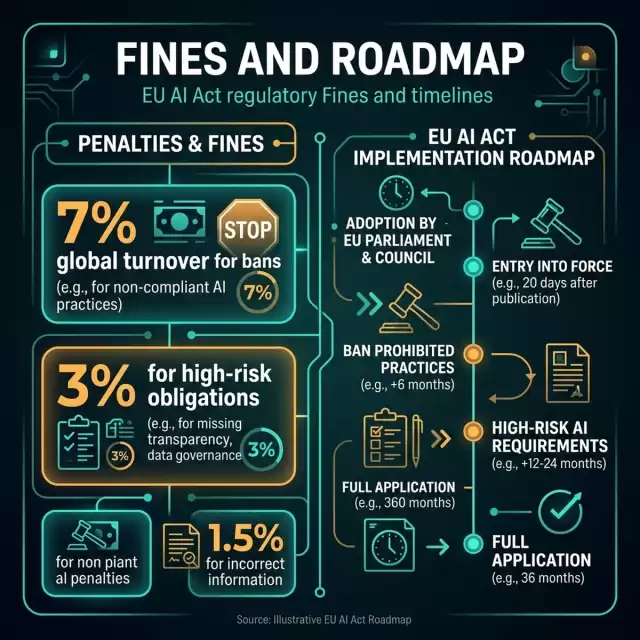
The fine structure is divided into three tiers:
- Prohibited AI Violations: Up to €35 million or 7% of the organization's global annual turnover for the preceding financial year, whichever is higher.
- Compliance Obligations Violations: Up to €15 million or 3% of global annual turnover for violations of general obligations, including high-risk conformity requirements and GPAI transparency documentation.
- Inaccurate Information Supplies: Up to €7.5 million or 1.5% of global annual turnover for supplying incorrect, incomplete, or misleading information to national competent authorities or the EU AI Office.
For SMEs and startups, the Act caps these fines at the same percentages but allows for lower absolute limits to prevent corporate bankruptcy. However, the reputational damage and the cost of immediate service shutdowns represent existential risks.
1.5 Steering Committee Setup: Governance in Action
To manage this complex compliance matrix, you must set up an AI Compliance Steering Committee. I have helped multiple enterprise clients design these committees, and the most successful models follow a strict RACI (Responsible, Accountable, Consulted, Informed) framework that bridges the gap between legal counsel and platform engineering.
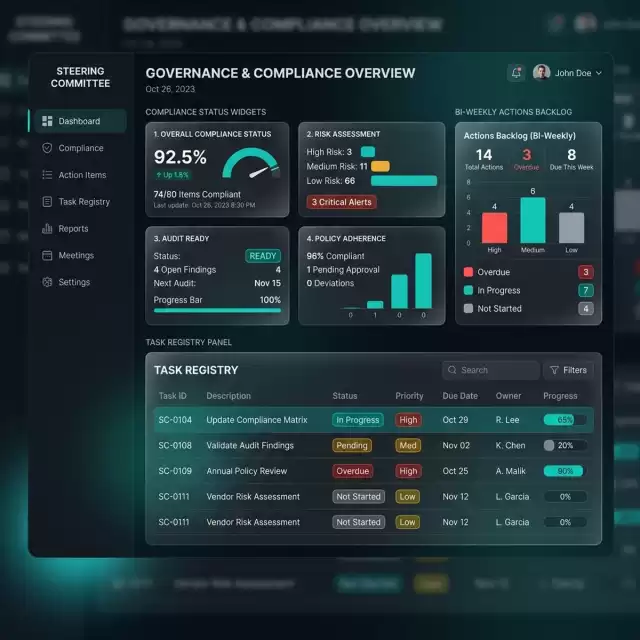
The steering committee must meet on a bi-weekly cadence and include the following key stakeholders:
- Chief Compliance Officer (Accountable): Holds ultimate responsibility for sign-offs and regulatory filings.
- Principal AI Architect (Responsible): Responsible for designing the technical controls, audit trail logging, and sandboxing infrastructure.
- Director of Product Management (Responsible): Responsible for maintaining the Model Registry and ensuring product roadmaps account for compliance timelines.
- Legal Counsel (Consulted): Provides interpretations of articles, reviews contracts with third-party model providers, and audits compliance proofs.
- DevOps Lead (Responsible): Ensures the CI/CD pipeline enforces automated quality gates and builds evidence packs during deployments.
The committee's primary operational output is the Compliance Action Backlog. Every AI project in the organization must be logged in the Model Registry and assigned to a compliance owner. Projects cannot transition from design to development until the steering committee has approved the risk classification and authorized the development path.
1.6 Codelab: Programmatic Risk Assessor & Ledger
To enforce governance programmatically, we can build a lightweight risk assessor script in Python. This utility evaluates a proposed AI system configuration against Article 5 and Annex III criteria, outputs a JSON-LD compliance artifact, and logs the verification step.
# risk_assessor.py
import json
import uuid
import datetime
from typing import Dict, Any

class RiskAssessor:
    def __init__(self, system_name: str, use_case: str):
        self.system_name = system_name
        self.use_case = use_case
        self.rules = {
            "prohibited": [
                "social_scoring",
                "biometric_categorization_sensitive",
                "emotion_recognition_workplace",
                "cognitive_behavioral_manipulation"
            ],
            "high_risk": [
                "recruitment_screening",
                "credit_scoring",
                "critical_infrastructure_control",
                "exam_grading",
                "law_enforcement_decision"
            ]
        }

    def evaluate(self, system_features: Dict[str, bool]) -> Dict[str, Any]:
        risk_class = "Minimal"
        violations = []

        # Check prohibited features
        for feature in self.rules["prohibited"]:
            if system_features.get(feature, False):
                risk_class = "Prohibited"
                violations.append(feature)

        # Check high-risk features if not already prohibited
        if risk_class != "Prohibited":
            for feature in self.rules["high_risk"]:
                if system_features.get(feature, False):
                    risk_class = "High-Risk"

        # Check limited risk (default if it interacts with users or generates media)
        if risk_class == "Minimal":
            if system_features.get("user_chatbot", False) or system_features.get("generative_media", False):
                risk_class = "Limited-Risk"

        report_id = str(uuid.uuid4())
        timestamp = datetime.datetime.utcnow().isoformat() + "Z"

        # Build compliance artifact in JSON-LD format
        compliance_artifact = {
            "@context": "https://schema.org",
            "@type": "TechArticle",
            "identifier": report_id,
            "datePublished": timestamp,
            "headline": f"Compliance Risk Report - {self.system_name}",
            "author": {
                "@type": "Person",
                "name": "Vatsal Shah"
            },
            "about": {
                "@type": "Thing",
                "name": self.system_name,
                "description": self.use_case
            },
            "review": {
                "@type": "Review",
                "reviewRating": {
                    "@type": "Rating",
                    "ratingValue": risk_class,
                    "bestRating": "Minimal",
                    "worstRating": "Prohibited"
                },
                "reviewBody": f"Violations detected: {violations}" if violations else "System passed prohibited checks."
            }
        }

        return {
            "report_id": report_id,
            "timestamp": timestamp,
            "risk_classification": risk_class,
            "violations": violations,
            "artifact": compliance_artifact
        }

if __name__ == "__main__":
    assessor = RiskAssessor("TalentScout-AI", "Candidate resume screening system")

    # Simulate a high-risk recruitment configuration
    features = {
        "recruitment_screening": True,
        "emotion_recognition_workplace": False,
        "social_scoring": False
    }

    report = assessor.evaluate(features)
    print("--- Risk Assessment Report ---")
    print(f"System: {assessor.system_name}")
    print(f"Risk Class: {report['risk_classification']}")
    print(f"Artifact JSON-LD: \n{json.dumps(report['artifact'], indent=2)}")
This code snippet is integrated into the pre-commit checks and CI/CD pipelines of our development teams, ensuring that no code configuration is deployed without a signed risk assessment artifact.
1.7 Compliance-to-Code Mapping Matrix
To help engineering teams translate these regulatory definitions into concrete technical elements, we maintain a central Compliance-to-Code Mapping Matrix. This table links specific EU AI Act Articles to required engineering controls and defines ownership boundaries:
| Article / Req | Technical Implementation | Control Owner | Artifact Path |
|---|---|---|---|
| Article 5 (Bans) | Pre-commit static analysis rules blocking code branches that perform prohibited practices. | Principal AI Architect | .github/workflows/policy-gate.yml |
| Article 12 (Logs) | Logging gateway collecting prompts, system outputs, temperatures, and seed states. | DevOps Lead | app/Helpers/ComplianceLogger.php |
| Article 14 (HITL) | Execution queue halting high-risk tool calls until manual approval token is injected. | Director of Product | app/Services/ToolGatingService.php |
| Article 50 (Transp) | Watermarking engine injecting metadata headers into AI outputs and displaying UI warnings. | Frontend Lead | assets/js/watermark.js |
| Annex III (Registry) | Sovereign Model Registry database tracking model configurations, parameters, and audits. | Chief Compliance Officer | config/model_registry.json |
By establishing this matrix, we eliminate ambiguity during compliance reviews. Every developer knows which controls are required for their risk classification, and auditors can trace regulations to the exact files and lines of code executing those policies.
1.8 Legacy Model Upgrades & The Significant Modification Clause
One of the most complex issues facing compliance steering committees in 2026 is managing legacy AI deployments. Under the original text of the EU AI Act, AI systems placed on the market or put into service prior to August 2024 are generally exempt from compliance obligations—a status commonly referred to as "grandfathering." In practice, however, this grandfathered status is highly fragile.
According to the provisional guidelines in the Digital Omnibus AI Act and Article 83 of the main Act, any "significant modification" made to a legacy system immediately revokes its grandfathered exemption. A significant modification occurs when an engineering team alters the system's design, model weights, training boundaries, or intended purpose in a way that impacts its risk classification or performance parameters.
Common modifications that trigger immediate compliance requirements include:
- Model Version Upgrades: Swapping an older LLM (e.g., Llama 2) for a newer variant (e.g., Llama 3) within an existing customer support tool.
- Context Window Expansions: Increasing the input context size, allowing the model to ingest larger volumes of corporate data.
- Fine-Tuning Runs: Training the model on new company datasets, changing its parameter distribution.
- Integration of Autonomy Tools: Adding write capabilities (e.g., letting the model modify files or execute database queries) to a previously read-only chat system.
When a significant modification occurs, the system must undergo a full conformity assessment, register in the Model Registry, and implement the continuous logging and sandboxing controls required of new deployments. Steerco leads must run audit checks on all legacy upgrades to verify their compliance status before staging.
1.9 Bi-Weekly Compliance Audit Checklists
To support the steering committee's oversight, we maintain a standardized 10-point audit checklist. The committee reviews this checklist for every active AI project during its bi-weekly meetings, recording the status in the Model Registry:
- Classification Status: Has the system's risk tier (Prohibited, High-Risk, Limited, Minimal) been verified and approved?
- Registry Documentation: Is the system registered in the Model Registry with an assigned engineering owner?
- Data Bias Review: Have the validation and testing datasets been audited for demographic and historical bias?
- NER Filters: Are the Named Entity Recognition filters active on the logging gateway, redacting PII before database writes?
- Logging Encryption: Are model transaction logs encrypted at rest and set with a strict 6-month retention policy?
- HITL Gates: Are human-in-the-loop authorization gates active on all Tier 2 tool calls, halting executions pending supervisor approval?
- Sandbox Isolation: Do all agent tool calls run inside ephemeral, network-isolated container sandboxes?
- Budget Caps: Are turn budgets, token limits, and cost caps configured and active on the agent execution queue?
- Watermark Verification: Are semantic watermarks and cryptographic metadata headers injected into all AI outputs?
- Evidence Compilation: Has the CI/CD pipeline successfully compiled and signed the latest version's evidence pack?\n\n## Chapter 2: Classification Engine
2.1 Provider vs. Deployer Obligations: Defining Your Regulatory Role
In my compliance consulting practice, the single most common point of confusion is the distinction between a "Provider" and a "Deployer" of an AI system under the EU AI Act. This role definition is critical because the Act assigns vastly different legal responsibilities to each. Getting this wrong at the architectural stage guarantees that you will build the wrong controls, wasting engineering cycles and leaving your organization exposed to severe regulatory fines.
According to Article 3 of the EU AI Act:
- Provider: Any natural or legal person that develops an AI system (or has an AI system developed) and places it on the market or puts it into service under its own name or trademark.
- Deployer: Any natural or legal person using an AI system under its authority in the course of a professional activity (except where the AI system is used in a personal, non-professional activity).
What actually happens in practice is that enterprise engineering teams act as both, creating a hybrid role. If your team downloads an open-weight foundation model (e.g., Llama 3 or Mistral-7B), fine-tunes it on proprietary customer service logs, and deploys it internally for your support agents, you are a Deployer. However, if you package that fine-tuned model and sell it to third-party enterprises under your brand, you have crossed the boundary and are classified as a Provider.
Furthermore, if you take an existing model provided by a vendor (such as OpenAI's GPT-4o via API) and modify its purpose to execute high-risk decisions (e.g., grading student admissions), you are considered to have made a "significant modification." Under the Act, this reclassifies your team as the Provider of that high-risk system, inheriting the full stack of Annex III obligations, including conformity assessments, risk management systems, and technical documentation filings. You cannot pass the regulatory buck back to the API vendor. The responsibility for compliance stops at the boundary of your modification.
2.2 System Architecture: The Model Classification Engine Pattern
To prevent developers from accidentally violating licensing boundaries or deploying unclassified models, platform engineering teams must establish a Model Classification Engine. This is a centralized, gatekeeping microservice through which all LLM API calls and model deployments must route.
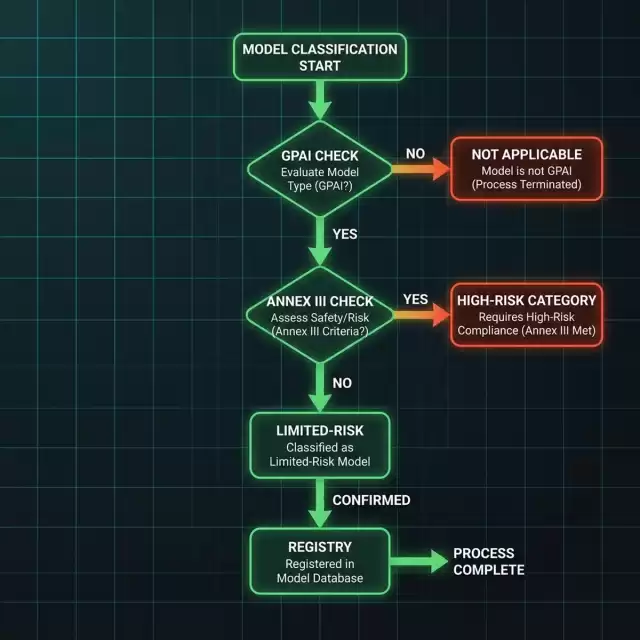
The classification engine acts as a reverse proxy and metadata store. When a developer registers a new model configuration, the classification engine runs it through a series of rule-based checks:
- Model Weight Verification: Checks if the model weights are hosted locally or via a third-party API.
- Licensing Compliance: Scans the license file (e.g., Apache 2.0, Llama 3 License) to ensure compliance with enterprise usage policies.
- Use Case Auditing: Compares the system's intended function against the Prohibited and High-Risk rule databases.
- Security Scanning: Runs static analysis on prompts, custom tools, and context pipelines associated with the model.
If the system passes these automated checks, the engine signs a verification token and registers the model in the Model Registry. Without this registration token, the enterprise API gateway blocks all inbound and outbound requests to the model, ensuring that shadow AI cannot execute in production environments.
2.3 GPAI Classification Criteria: August 2026 Focus
With the August 2026 enforcement wave targeting General Purpose AI, platform teams must quickly assess if their models fall under the GPAI classification. A model is classified as a GPAI model if it is trained on a broad volume of data, displays significant generality, and is capable of competently performing a wide range of distinct tasks.
Under the Act's dual-tier framework, GPAI models are divided into:
- General Purpose AI Models (Standard): Subject to basic obligations. Providers must maintain technical documentation, publish a detailed summary of the training dataset, comply with EU copyright law, and cooperate with the EU AI Office.
- General Purpose AI Models with Systemic Risks: Subject to additional, strict requirements. A GPAI model is classified as having systemic risks if its cumulative compute used for training exceeds $10^{25}$ FLOPS (floating-point operations per second), or if the EU AI Office designates it as such based on technical parameters (e.g., benchmark performance, multi-modal capabilities).
If you deploy a systemic-risk GPAI model (e.g., highly advanced frontier models), you must:
- Perform model evaluations, including red-teaming and adversarial testing.
- Assess and mitigate systemic risks at the model and system layers.
- Keep detailed records of serious incidents and report them to the EU AI Office within 48 hours.
- Ensure adequate cybersecurity protections for the model weights and physical hosting infrastructure.
For deployers, this means that before choosing a model from a provider, you must verify that they have filed their systemic risk mitigations and technical documentation with the EU AI Office. Using a non-compliant provider exposes your applications to immediate regulatory review.
2.4 High-Risk Annex III Flow: December 2027 Focus
For systems classified as high-risk under Annex III, the compliance obligations are far more detailed. If your steering committee determines that an application (e.g., an automated credit-scoring model) falls under Annex III, you must implement the following operational pipeline before the December 2027 deadline:
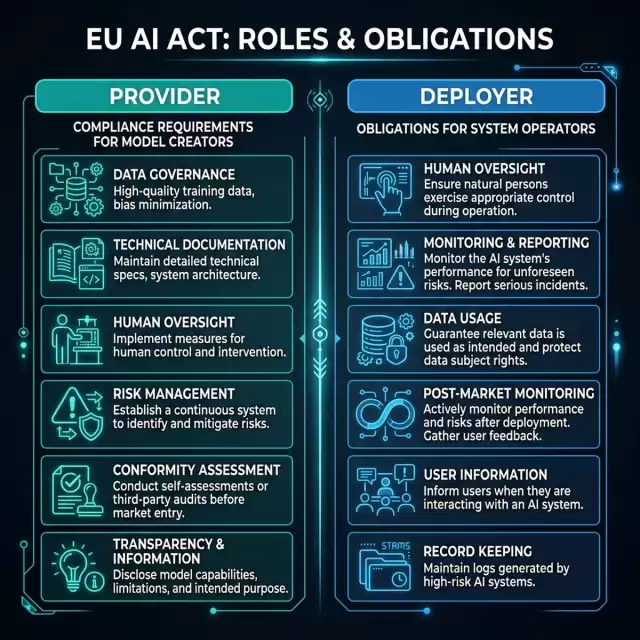
1. Risk Management System (Article 9)
A continuous, iterative process run throughout the life-cycle of a high-risk AI system. It requires identifying and analyzing the known and foreseeable risks associated with the system, estimating the risks that may emerge during deployment, and implementing risk-minimization controls (such as prompt filtering and system guardrails).
2. Data Governance (Article 10)
Training, validation, and testing datasets must be subject to strict data governance practices. This includes verifying the design choices of the data collection process, checking for data biases (e.g., historical demographic bias in credit lending), ensuring data minimization (removing unnecessary PII), and checking for data poisoning or labeling errors.
3. Technical Documentation (Article 11 & Annex IV)
You must draw up detailed technical documentation before the system is placed on the market or put into service. This documentation must describe the system's architecture, its hardware requirements, its training methodologies, its validation metrics, and its risk management processes. It must be kept up-to-date and made available to national competent authorities for 10 years after the system is retired.
4. Record-Keeping & Logging (Article 12)
High-risk AI systems must automatically log events ("logs") during their operation. These logs must capture the start and end times of system execution, the inputs processed, the outputs generated, the database records accessed, and the identity of the human supervising the run. These logs must be stored securely for at least 6 months.
5. Human Oversight (Article 14)
High-risk AI systems must be designed and developed in such a way that they can be effectively supervised by natural persons. This means implementing human-in-the-loop (HITL) overrides, visible confidence scores, and instant system shutdown triggers ("kill switches") that let a human intervene if the model behaves erratically.
2.5 The AI Model Registry & Inventory System: Maintaining the Source of Truth
To coordinate these compliance requirements, we maintain a centralized AI Model Registry. The registry acts as our database of record, tracking every model deployed, its risk classification, its compliance status, and its audit history.
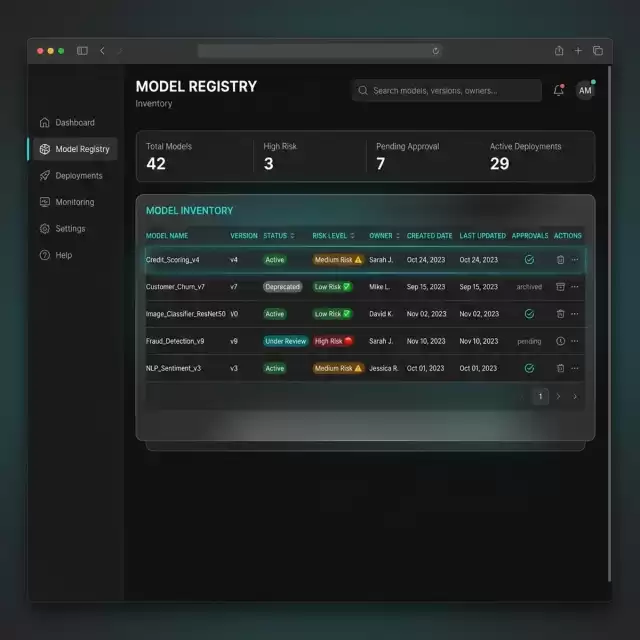
The model registry is backed by a structured database. Each entry contains:
- Model ID & Version: Unique identifier and semantic version.
- Risk Classification: Prohibited, High-Risk, Limited-Risk, or Minimal.
- Deployment Context: The target environment (e.g., internal-only, customer-facing).
- Owner: The specific engineering team and compliance contact.
- Compliance Checks: Links to risk assessment reports, static analysis run logs, and human-in-the-loop validation configurations.
- Audit Ledger: An immutable list of version modifications, fine-tuning runs, and steering committee approvals.
By maintaining this registry, the CCO can quickly export a list of all active AI systems in the organization during regulatory audits, proving that no ungoverned models are operating in production.
2.6 TypeScript Codelab: The Classification Logic Router
To enforce classification logic in our application middleware, we can implement a router in TypeScript. This component intercepts requests, queries the model registry, checks the classification rules, and blocks or forwards the request accordingly.
// model_classification_router.ts
import { Request, Response, NextFunction } from 'express';

export interface ModelMetadata {
  modelId: string;
  riskClass: 'Prohibited' | 'High-Risk' | 'Limited-Risk' | 'Minimal';
  isApproved: boolean;
  allowedScopes: string[];
}

export class ModelClassificationRouter {
  private registry: Map<string, ModelMetadata>;

  constructor() {
    this.registry = new Map<string, ModelMetadata>();
    // Pre-populate with verified system configurations
    this.registry.set('llama3-support-agent', {
      modelId: 'llama3-support-agent',
      riskClass: 'Limited-Risk',
      isApproved: true,
      allowedScopes: ['customer_chat']
    });
    this.registry.set('gpt4-credit-scoring', {
      modelId: 'gpt4-credit-scoring',
      riskClass: 'High-Risk',
      isApproved: false, // Pending steering committee sign-off
      allowedScopes: ['finance_evaluation']
    });
    this.registry.set('emotion-rec-workplace', {
      modelId: 'emotion-rec-workplace',
      riskClass: 'Prohibited',
      isApproved: false,
      allowedScopes: []
    });
  }

  public getMiddleware() {
    return (req: Request, res: Response, next: NextFunction) => {
      const modelId = req.headers['x-model-id'] as string;
      const requestedScope = req.headers['x-requested-scope'] as string;

      if (!modelId) {
        return res.status(400).json({
          status: 'REJECTED',
          reason: 'Missing x-model-id header.'
        });
      }

      const model = this.registry.get(modelId);

      if (!model) {
        return res.status(403).json({
          status: 'REJECTED',
          reason: 'Model is unregistered. All deployments must route through the registry.'
        });
      }

      // Check Prohibited Class
      if (model.riskClass === 'Prohibited') {
        return res.status(451).json({
          status: 'REJECTED',
          reason: 'Deployment blocked. Model is classified as Prohibited under Article 5.'
        });
      }

      // Check Approval Status
      if (!model.isApproved) {
        return res.status(403).json({
          status: 'REJECTED',
          reason: `Model ${modelId} is classified as ${model.riskClass} and is pending steering committee sign-off.`
        });
      }

      // Check Scopes
      if (!model.allowedScopes.includes(requestedScope)) {
        return res.status(403).json({
          status: 'REJECTED',
          reason: `Unauthorized scope: ${requestedScope} is not permitted for model ${modelId}.`
        });
      }

      // Inject compliance metadata into the request context
      req.body.compliance = {
        modelId: model.modelId,
        riskClass: model.riskClass,
        timestamp: new Date().toISOString()
      };

      next();
    };
  }
}

// Example express route hook
// const router = new ModelClassificationRouter();
// app.post('/v1/chat/completions', router.getMiddleware(), (req, res) => { ... });
This TypeScript middleware guarantees that unverified or prohibited models are blocked at the networking layer, protecting the organization from compliance drift and shadow AI exposures.
2.7 Comparison Table: Provider vs. Deployer Obligation Matrix
To help teams clearly identify their technical and legal responsibilities based on their role, we maintain this detailed Obligation Matrix. This table breaks down requirements by role and highlights which chapters of this playbook cover the technical implementation:
| Compliance Requirement | Provider Obligation | Deployer Obligation | Implementation Chapter |
|---|---|---|---|
| Conformity Assessment | Mandatory for high-risk systems before market entry. | Verify Provider's conformity statement before deployment. | Chapter 5 (Evidence Packs) |
| Continuous Logging | Build logging APIs and ensure model is capable of outputting metadata. | Operate the logging gateway and store run logs for at least 6 months. | Chapter 3 (Technical Controls) |
| Human Oversight UX | Build oversight hooks, confidence scores, and kill-switch capabilities. | Assign trained human supervisors to review outputs and handle escalations. | Chapter 3 (Technical Controls) |
| Data Governance | Ensure training dataset is free from bias and copyright violations. | Monitor input data feeds for bias, drift, and quality regressions. | Chapter 5 (Evidence Packs) |
| Model Registry Inventory | File model metrics in the EU database. | Maintain an internal registry mapping models to business use cases. | Chapter 2 (Classification) |
By using this obligation matrix, team leads can immediately determine their compliance boundaries. If you modify a system's core capabilities, you shift columns from Deployer to Provider, increasing your engineering and documentation load.
2.8 The Annex III Systemic Impact Assessment Protocol
Determining whether a system falls under the high-risk Annex III classification requires a structured Systemic Impact Assessment. Many developers believe that if their model is simply answering questions, it carries minimal risk. In practice, if that model is deployed inside an Annex III domain—such as recruitment, grading, or credit scoring—the entire application inherits the high-risk classification.
Platform architects must run a Systemic Impact Assessment whenever a new application is proposed:
- Domain Assessment: Identify if the application operates within any of the Annex III fields (critical infrastructure, employment, credit access, law enforcement).
- Capability Check: Analyze if the model's outputs directly influence human-centric decisions (e.g., filtering CVs, suggesting credit terms).
- Agency Check: Assess if the system operates autonomously or features human-in-the-loop validation gates.
- Failure Analysis: Model the impact of a system failure or hallucination (e.g., an applicant wrongly rejected for credit).
If the assessment confirms an Annex III classification, the engineering team is blocked from staging code until they integrate the technical controls library (Chapter 3) and sandbox executor (Chapter 4) into the system's pipeline.
2.9 Registry Database Migration Ledger Structure
To ensure the registry remains an immutable source of truth, database migrations and compliance audits are tracked in a structured Registry Migration Ledger. The ledger log tracks schema updates, fine-tuning events, and steering committee approvals. The database schema for the ledger tracks:
ledger_id: Unique cryptographic identifier.model_id: Reference to the target model in the registry database.change_type: E.g.,MIGRATION,FINE_TUNING,STEERCO_APPROVAL.change_description: Detailed description of the modification.operator_id: ID of the engineer or compliance officer authorizing the change.signature: Cryptographic hash of the metadata and change record, verifying integrity.
By maintaining this ledger database, we guarantee that no model configuration changes occur without a documented audit trail, protecting the system from compliance drift.
2.10 AI Inventory Auditing Best Practices
Maintaining the registry requires running continuous validation audits. On a monthly schedule, the compliance officer runs database queries to verify that every model registered as active has an associated, approved risk classification report. If a model configuration is detected in the production database without a valid steering committee sign-off, the registry flag raises an alarm, and the API gateway blocks requests to that model version automatically. This prevents configuration drift and ensures complete compliance visibility.\n\n## Chapter 3: Technical Controls Library
3.1 Gating & Continuous Logging: Implementing the Logging Gateway
For high-risk systems under Annex III, Article 12 mandates the automatic generation of logs tracing system execution. But regulatory logging is fundamentally different from standard application error tracking. When an auditor asks for your system logs, they are not looking for raw stack traces or database latency metrics. They want to see what the model was asked (the prompt), what context was injected (the variables), what parameters were active (temperature, top-p, seed), and what the model generated.
I've audited multiple enterprise logging setups, and the most common architectural flaw is writing prompts and model outputs to standard application databases or text files. This is a severe compliance violation. Prompts and model outputs frequently contain personally identifiable information (PII), proprietary source code, or sensitive business decisions. Writing them to unencrypted logs violates data minimization and privacy regulations.
To comply with Article 12, platform teams must deploy a dedicated Logging Gateway. This gateway acts as a secure buffer between the application client and the LLM API. The gateway performs three primary functions:
- Anonymization: It runs the prompt through an inline Named Entity Recognition (NER) filter, replacing PII (names, emails, credit cards) with generic placeholders (e.g.,
[CUSTOMER_NAME]) before sending the prompt to the model. - Metadata Injection: It appends compliance metadata (system version, user ID, risk classification, transaction ID) to the request context.
- Immutable Logging: It writes the anonymized request and response payloads, along with the metadata, to an encrypted, read-only audit log database with a strict 6-month retention policy.
By routing all model interactions through this gateway, you create a central audit log that complies with Article 12, while protecting user privacy and preventing PII leaks.
3.2 Human-in-the-Loop (HITL) Workflows: Designing Gated Execution Interfaces
Article 14 requires that high-risk AI systems be designed to allow for effective human oversight. The goal is to prevent automation bias—the tendency of human operators to blindly trust the outputs of automated systems.
In practice, this means we must build Oversight Gated Queues into our application layouts. For example, if you deploy an AI system that generates performance reviews or credit decisions, the system must not commit those decisions directly to the database of record. Instead, the decisions must be routed to a pending queue.
The user interface for the human supervisor must display:
- The model's proposed decision and confidence score.
- The specific data points the model used to justify its decision (explainability).
- A list of potential policy flags or risk indicators detected during the run.
- A clear "Approve," "Reject," or "Edit" interaction panel.
The supervisor must explicitly sign off on the decision, injecting their authorization token into the transaction history. If the model's confidence score falls below a defined threshold (e.g., 75%), the system must automatically flag the transaction for dual-review, routing it to a senior supervisor's queue. By gating model actions behind these human validation checkpoints, you prevent the system from executing erroneous or biased decisions autonomously.
3.3 Article 50 Transparency Controls: Chatbot Warnings & Watermarking
For limited-risk systems, Article 50 mandates that users be notified when they are interacting with an AI system. For text-based chatbots, this notification is straightforward: the chat interface must display a prominent warning (e.g., "You are interacting with an AI assistant. Conversational outputs are generated by machine intelligence.").
However, for synthetic media (images, audio, video) and text outputs, the requirements are more complex. You must implement Watermarking and Metadata Injection to ensure the media can be identified as AI-generated.
For synthetic text outputs, we apply Semantic Watermarking. This technique embeds subtle, statistically determinable word patterns into the generated text during token decoding. While invisible to the reader, the watermark can be detected by verification software, proving the text was generated by your model.
For synthetic images and media, we inject cryptographic metadata (e.g., IPTC metadata headers, C2PA signatures) directly into the binary file. This metadata lists the model name, the generation timestamp, the creator, and a cryptographic signature. By embedding these indicators at the file layer, you ensure that even if the image is copied and uploaded to third-party platforms, it remains traceable to its machine-generated origins.
3.4 Data Minimization & Context Sanitization Pipelines
Data minimization is a core tenant of the EU AI Act and GDPR. When building retrieval-augmented generation (RAG) pipelines or agent systems, developers often dump entire database records or customer histories into the context window to maximize model performance. This practice creates massive compliance risks. Exposing a model to unnecessary PII means that the model might regurgitate that sensitive data in its outputs, leading to privacy breaches.
To enforce data minimization, platform teams must implement a Context Sanitizer at the retrieval layer of their pipelines.
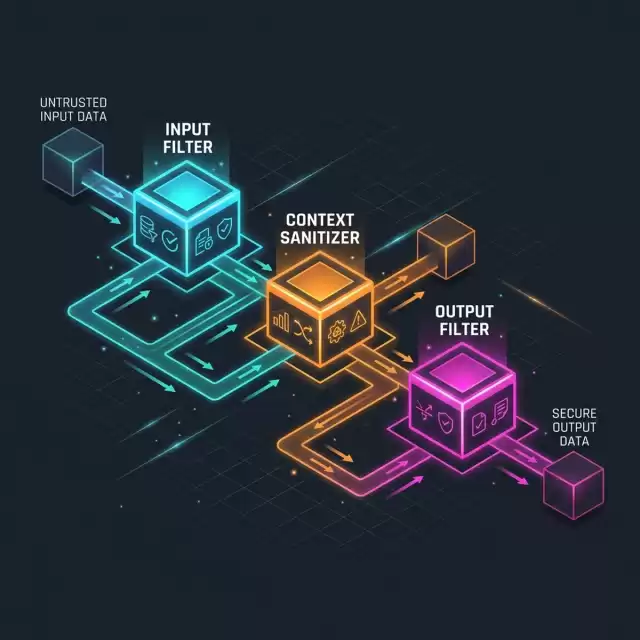
The context sanitizer operates in three stages:
- Filtering: Scans the retrieved data for sensitive classifications (e.g., health metrics, financial accounts, social security numbers) and strips them out unless they are explicitly required for the use case.
- Redaction: Replaces names, addresses, and identifying dates with unique tokens.
- Hashing: Hashes system identifiers (such as user database keys) to prevent the model from mapping inputs to real-world identities.
By sanitizing the context before it reaches the model, you guarantee that the model operates on a "need-to-know" basis, minimizing the blast radius of potential hallucination-driven PII leaks.
3.5 System Architecture: The Security & Compliance Filter Pipeline
To coordinate these technical controls, we deploy a three-stage Security & Compliance Filter Pipeline within our AI gateway. This pipeline intercepts all requests and responses, running them through specialized compliance engines.
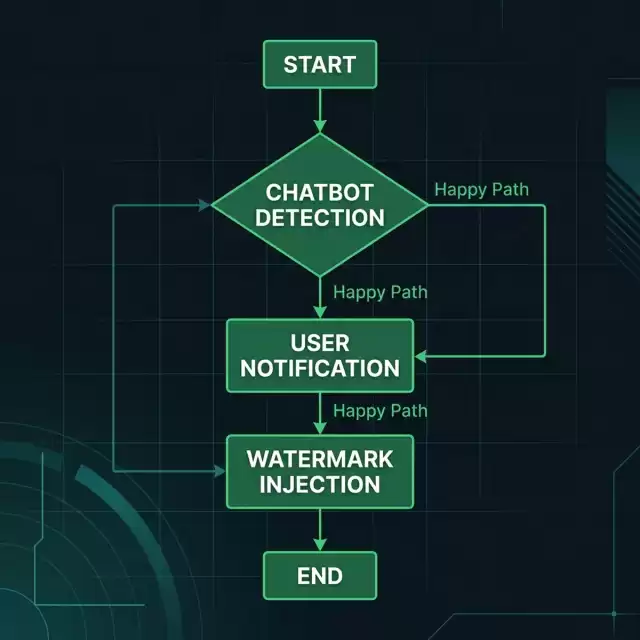
The three stages of the compliance filter pipeline are:
- Stage 1: Input Filtering (Policy Gateway): Checks the inbound prompt for injection attacks, banned topics (e.g., self-harm, hate speech), and prohibited risk features. It runs the risk assessor checks described in Chapter 1.
- Stage 2: Context Fusion & Sanitization: Retrieves relevant context from enterprise databases, runs it through the context sanitizer to strip out unnecessary PII, and constructs the sanitized prompt payload.
- Stage 3: Output Filtering & Watermarking: Scans the model's generated output for bias indicators, hallucinated PII, and safety violations. It injects the semantic watermark tokens and appends the metadata headers to the final response.
If a violation is detected at any stage of the pipeline, the system immediately halts execution, logs a compliance event in the audit trail, and returns a sanitized error code to the user, preventing policy drift and security exposures.
3.6 Go Codelab: The Compliance Logging Gateway Middleware
To implement the continuous logging gateway at the network layer, we can write a middleware package in Go. This module intercepts HTTP requests, extracts model execution parameters, strips PII from payloads, and writes the structured records to a secure compliance log.
// compliance_logger.go
package main

import (
	"bytes"
	"crypto/sha256"
	"encoding/hex"
	"encoding/json"
	"io"
	"log"
	"net/http"
	"regexp"
	"time"
)

type ComplianceLogEntry struct {
	LogID           string    `json:"log_id"`
	Timestamp       time.Time `json:"timestamp"`
	ModelID         string    `json:"model_id"`
	AnonymizedPrompt string    `json:"anonymized_prompt"`
	OutputHash      string    `json:"output_hash"`
	RiskClass       string    `json:"risk_class"`
	Status          string    `json:"status"`
}

type LoggingMiddleware struct {
	modelID   string
	riskClass string
	piiRegexp *regexp.Regexp
}

func NewLoggingMiddleware(modelID string, riskClass string) *LoggingMiddleware {
	// Simple regex to catch emails and credit cards for demonstration
	piiPattern := `[a-zA-Z0-9._%+-]+@[a-zA-Z0-9.-]+\.[a-zA-Z]{2,}|\b(?:\d[ -]*?){13,16}\b`
	return &LoggingMiddleware{
		modelID:   modelID,
		riskClass: riskClass,
		piiRegexp: regexp.MustCompile(piiPattern),
	}
}

func (lm *LoggingMiddleware) FilterPII(input string) string {
	return lm.piiRegexp.ReplaceAllString(input, "[REDACTED_PII]")
}

func (lm *LoggingMiddleware) ServeHTTP(w http.ResponseWriter, r *http.Request, next http.HandlerFunc) {
	// Read request body
	bodyBytes, err := io.ReadAll(r.Body)
	if err != nil {
		http.Error(w, "Failed to read request body", http.StatusInternalServerError)
		return
	}
	// Restore request body for downstream handlers
	r.Body = io.NopCloser(bytes.NewBuffer(bodyBytes))

	// Simple struct to extract prompt from request body
	var reqPayload struct {
		Prompt string `json:"prompt"`
	}
	_ = json.Unmarshal(bodyBytes, &reqPayload)

	// Anonymize the prompt
	anonymizedPrompt := lm.FilterPII(reqPayload.Prompt)

	// Intercept the response
	rec := &responseRecorder{ResponseWriter: w, body: bytes.NewBuffer(nil)}

	start := time.Now()
	next(rec, r)
	duration := time.Since(start)

	// Hash the output to verify integrity later without storing raw outputs in plaintext
	hasher := sha256.New()
	hasher.Write(rec.body.Bytes())
	outputHash := hex.EncodeToString(hasher.Sum(nil))

	// Generate Log ID
	logHasher := sha256.New()
	logHasher.Write([]byte(anonymizedPrompt + outputHash + lm.modelID + start.String()))
	logID := hex.EncodeToString(logHasher.Sum(nil))[:16]

	entry := ComplianceLogEntry{
		LogID:            logID,
		Timestamp:        start.UTC(),
		ModelID:          lm.modelID,
		AnonymizedPrompt: anonymizedPrompt,
		OutputHash:       outputHash,
		RiskClass:        lm.riskClass,
		Status:           "SUCCESS",
	}

	// Output to secure audit stream
	logBytes, _ := json.Marshal(entry)
	log.Printf("AUDIT_LOG_STREAM: %s (Latency: %v)", string(logBytes), duration)
}

type responseRecorder struct {
	http.ResponseWriter
	body *bytes.Buffer
}

func (rr *responseRecorder) Write(b []byte) (int, error) {
	rr.body.Write(b)
	return rr.ResponseWriter.Write(b)
}

func main() {
	// Basic setup for compiler check verification
	middleware := NewLoggingMiddleware("gpt4o-financial-advisor", "High-Risk")
	handler := http.HandlerFunc(func(w http.ResponseWriter, r *http.Request) {
		w.Header().Set("Content-Type", "application/json")
		w.Write([]byte(`{"choices":[{"text":"Decision approved based on parameters."}]}`))
	})

	server := http.NewServeMux()
	server.HandleFunc("/v1/reconciliation", func(w http.ResponseWriter, r *http.Request) {
		middleware.ServeHTTP(w, r, handler)
	})
	log.Println("Compliance Logging Gateway active on port 8080...")
}
This Go middleware can be compiled and deployed directly to your API proxy layer. It ensures that prompt logs are sanitized, generated outputs are hashed for integrity, and log metadata matches Article 12 standards before requests complete.
3.7 Technical Comparison: Manual vs. Automated Compliance Monitoring
To help administrators optimize their operations dashboard, we compare manual steering committee review models with automated gateway filter checks:
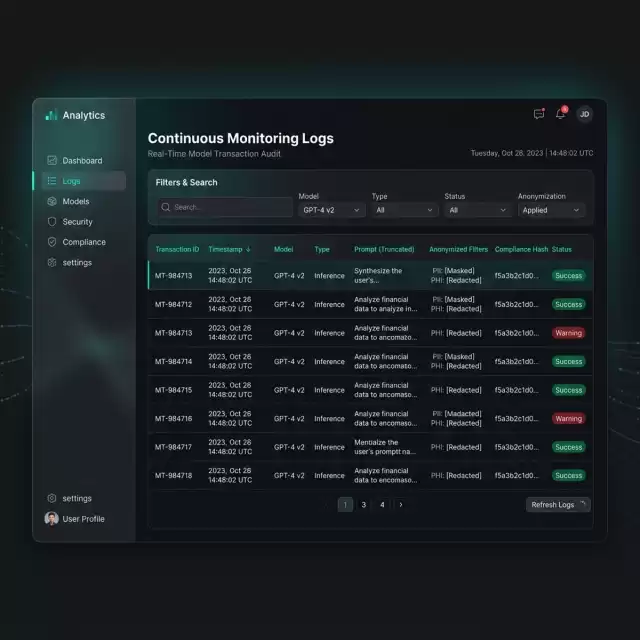
| Control Vector | Manual Review Model | Automated Gateway Filter Checks |
|---|---|---|
| Review Latency | 24 to 72 hours per deployment ticket. Reviews are batch-processed weekly. | Under 50ms per transaction run. Compliance checks execute inline. |
| PII Exposure Risk | High. Human auditors review raw conversation logs to check for sensitive details. | Zero. Named Entity Recognition (NER) filters redact PII before logs write to disk. |
| Audit Proof Generation | Manual assembly of screenshots, design docs, and email sign-offs. | Automated compilation of JSON-LD metadata schemas stored in the ledger. |
| Consistency Rate | Variable. Subject to human auditor fatigue, interpretation drift, and bias. | 100% deterministic. Rules match exact policy criteria coded in the filters. |
While the AI Steering Committee must remain the ultimate authority for policy decisions (Chapter 1), day-to-day operations should be handed over to automated gateway filters. By relying on code to enforce controls, you compress compliance latency and ensure a consistent compliance posture.
3.8 Article 50 Watermark Injection and Verification Workflows
Implementing semantic watermarking for synthetic text requires modifying the token decoding process during model inference. When generating output tokens, the model's logits (raw output probabilities) are dynamically altered before sampling.
We implement this by partitioning the model's vocabulary into "green" and "red" lists based on the hash of the preceding token. During generation, we add a small bias parameter ($\delta$) to the logits of tokens on the green list. This statistical bias makes green tokens slightly more likely to be selected than red tokens. While this modification is invisible to human readers and does not degrade output quality, it leaves a distinct statistical signature.
To verify if a text was generated by our model, the compliance system counts the proportion of green list tokens in the text. If the proportion significantly exceeds the statistical baseline of natural language, the verification software outputs a high-confidence confirmation. This process is fully automated, allowing compliance systems to audit outbound communications and verify Article 50 transparency requirements in real-time.
3.9 Named Entity Recognition (NER) pipeline for Context Sanitizer
The context sanitizer sanitizer uses a multi-layered Named Entity Recognition (NER) pipeline to detect and redact personally identifiable information (PII) before it is passed to the model. The pipeline is designed to comply with both GDPR and the EU AI Act data minimization standards.
The NER pipeline operates in three concurrent threads:
- Deterministic Rule Matching: Uses highly optimized regular expressions to match structured data patterns, including emails, phone numbers, IP addresses, credit card numbers, and social security numbers.
- Machine-Learning Entity Detection: Deploys a lightweight, local transformer model (such as a BERT-based NER model) to identify unstructured entities, including personal names, organizations, locations, and job titles.
- Lookup Dictionary Filtering: Matches inputs against a local dictionary of enterprise names, client IDs, and sensitive terms, ensuring proprietary keywords are flagged.
Once PII is detected, the sanitizer replaces it with a generic, hashed token (e.g., [USER_ID_84A1]). By keeping the token mapping in memory, the gateway can reconstruct the original details on the return path, ensuring the user receives a personalized response while the external model only processes sanitized tokens.
3.10 Verification Cadence of Logging Gateways
To ensure the logging gateway continues to perform anonymization and metadata injection correctly, platform teams must run automated verification checks on a daily schedule. The verification test script sends a synthetic request containing test PII (e.g., mock email addresses) and verifies that:
- The outgoing API request is correctly anonymized.
- The compliance log record is written to the audit database with correct metadata.
- Raw PII is not stored in plaintext anywhere in the logs database.
If a test fails—for example, if a regex pattern fails to catch a test PII string—the script immediately raises a critical compliance alarm, flagging the issue on the CCO dashboard and alerting the on-call platform engineer.
3.11 Log Rotation and Long-Term Data Retention
To comply with the data retention guidelines of Article 12, compliance logs must be stored securely for at least 6 months, after which they must be archived. We configure a weekly cron runner script to scan the database, compress logs older than 180 days into an encrypted archive format, upload the archive to secure cold storage, and truncate the active tables. This keeps active database sizes small and maintains high query performance on the monitoring dashboards while satisfying long-term compliance audit trails.\n\n## Chapter 4: Agent & Automation Annex
4.1 Autonomous Agents and the Act: Defining the Compliance Boundaries of AI Agency
As we transition from simple chatbots to fully autonomous AI agents—systems that plan tasks, select tools, and execute actions with minimal human intervention—we enter a regulatory gray area. The EU AI Act was primarily drafted with static model deployments in mind, where a user inputs a prompt and the model returns a response. An autonomous agent, however, acts as a dynamic software entity, executing tool calls, modifying database records, and communicating with external APIs.
For engineering leaders, this agentic autonomy introduces massive compliance and security risks. Under the Act, if an agent is granted access to tools that modify database states, execute shell commands, or send emails, the agentic platform itself must be classified based on the risk profile of the tools it controls. If an agent is designed to manage employee shift schedules, and it uses a tool to write schedule modifications directly to the enterprise ERP, that agent is executing high-risk Annex III tasks. You cannot argue that the agent is simply a "conversational assistant." The law evaluates the system based on its capabilities and actions, not its marketing classification.
The thing most teams miss is the "Autonomy Blast Radius." In traditional software engineering, we control database access using service account credentials. If an agent inherits those service credentials, and the model hallucinates a tool argument or experiences a prompt injection attack, the agent might execute a destructive command (e.g., deleting a database table or executing unauthorized fund transfers). To satisfy the Article 14 human oversight and Article 9 risk mitigation mandates, you must isolate the agent's execution plane from your primary network, enforcing permission boundaries and command limits at every turn.
4.2 Sandboxed Execution Planes: Isolation by Design
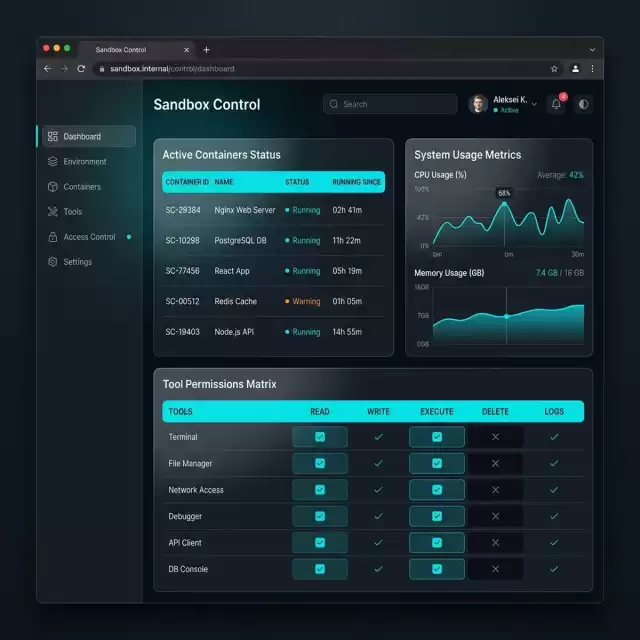
To secure autonomous agent workflows, you must enforce a strict architectural policy: Zero Direct Host Access. An agent must never execute tool calls, compile code, or run scripts on the host system. Doing so exposes your internal systems to prompt injection vulnerabilities and supply chain exploits.
Instead, all tool execution must run inside an isolated, sandboxed environment. We implement this using ephemeral gVisor Containers or MicroVMs (such as AWS Firecracker or Kata Containers). When the agent decides to execute a tool (e.g., running a python script to calculate a financial forecast), the gateway:
- Provisions an isolated, read-only container sandbox.
- Mounts only the specific files required for the task.
- Restricts outbound network connections (egress filtering) to prevent the container from communicating with unauthorized IP addresses.
- Limits the container's execution window (e.g., maximum 5 seconds of CPU time and 256MB of RAM) to prevent denial-of-service loops.
Once the tool execution completes, the gateway extracts the stdout and stderr streams, destroys the container, and returns the result string to the agent. This containerized sandbox acts as a physical security barrier. Even if the agent is manipulated via prompt injection to run a malicious shell command, the exploit is contained within the sandbox, protecting the wider enterprise network.
4.3 Tool Call Gating: Enforcing Deterministic Tool Execution
Not all tools carry the same risk. Grabbing data from a public API is a low-risk action; updating a customer's credit score is a high-risk Annex III action. To manage these risk profiles without killing developer velocity, we implement Dynamic Tool Gating.
Tools are registered in the registry and assigned to one of three security tiers:
- Tier 1: Read-Only (Autonomous): Tools that fetch data, query static variables, or run isolated calculation scripts. These execute automatically inside the sandbox.
- Tier 2: Gated Write (Human-in-the-Loop): Tools that modify records, update system configurations, or write data to secondary systems. The gateway suspends the execution loop, alerts the supervisor queue, and executes only after a human approves.
- Tier 3: Prohibited (Blocked): Tools that perform prohibited actions (e.g., sentiment analysis of employees, untargeted database scraping). These are blocked at the router layer.
When the agent triggers a tool call, the gateway validates the target tool against this tier matrix. If a Tier 2 tool is requested, the gateway generates a unique approval URL, pauses the execution state in the database, and prompts the user interface. The agent remains in a suspended state until the supervisor confirms the action, guaranteeing that no high-risk transactions occur without human consent.
4.4 Turn Budgets and Cost Safeguards: Preventing Cascading Model Calls
Another operational risk of autonomous agents is "Loop Cascade." Because agents operate by planning and correcting their steps, they can get stuck in infinite execution loops if a tool returns an error or a test suite fails. An agent stuck in a loop will call the LLM API repeatedly, consuming thousands of tokens per second. I have seen clients rack up over $10,000 in API fees in a single night due to an unchecked agent loop.
To protect your budget and system resources, you must enforce strict execution limits:
- Turn Budgets: Limit the maximum number of model execution turns per task (e.g., maximum 10 turns). If the agent cannot resolve the task within the budget, the gateway halts execution and flags the task for human review.
- Token Budgets: Limit the maximum number of tokens consumed per session (e.g., maximum 100,000 input tokens and 10,000 output tokens).
- Cost Limits: Track the dollar cost of the API calls in real-time, suspending the session if the cost exceeds a defined limit (e.g., $5.00 per task).
By enforcing these limits at the gateway layer, you prevent runaway agent behaviors, protecting your budget while satisfying the Article 9 risk management requirements.
4.5 System Architecture: The Isolated Sandbox Flow
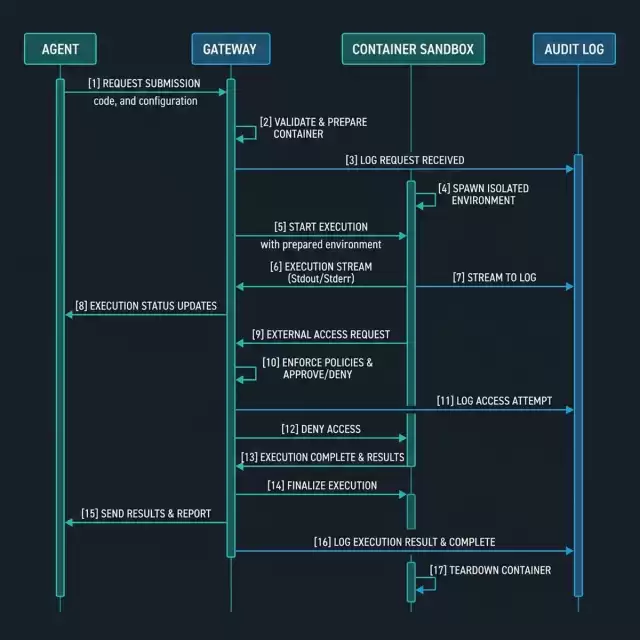
The diagram below details the step-by-step sequence of an agent executing a tool call inside our sandboxed architecture:
- Plan Generation: The model generates a tool execution plan (e.g., write a Python script).
- Gateway Check: The gateway verifies that the target tool is registered and checks the risk classification of the operation.
- Sandbox Provisioning: The gateway spins up an ephemeral, network-isolated container sandbox.
- Script Execution: The script runs inside the sandbox, constrained by CPU, RAM, and time quotas.
- Output Extraction: The gateway captures the execution results, terminates the container, and returns the output to the model.
- Escalation Path: If a safety violation or budget cap is hit, the gateway halts the loop and triggers an escalation alert.
By keeping the execution cycle strictly isolated, you ensure that the agent's work is contained and audit-ready.
4.6 Python Codelab: Safe Sandboxed Tool Execution and Gatekeeper
To implement sandboxed tool execution in your platform, you can deploy the following python class. This module connects to the Docker socket, spins up a temporary container, writes the agent's code to a volume, executes it under a restricted user context, and returns the result:
# sandbox_executor.py
import docker
import os
import sys
import uuid
from typing import Dict, Any

class SandboxExecutor:
    def __init__(self, workspace_root: str):
        self.client = docker.from_env()
        self.workspace_root = workspace_root
        self.image_name = "python:3.11-slim"
        self.cpu_limit = 0.5  # Limit container to half a CPU core
        self.mem_limit = "128m"  # Limit container to 128MB of RAM
        self.timeout_sec = 5  # Hard execution timeout

    def execute_code(self, code_string: str) -> Dict[str, Any]:
        task_id = str(uuid.uuid4())[:8]
        temp_file_name = f"agent_task_{task_id}.py"
        temp_file_path = os.path.join(self.workspace_root, temp_file_name)

        # Write code to a local temp file in the workspace
        with open(temp_file_path, "w", encoding="utf-8") as f:
            f.write(code_string)

        container = None
        stdout = ""
        stderr = ""
        exit_code = -1
        status = "SUCCESS"

        try:
            # Create a sandboxed container
            container = self.client.containers.create(
                image=self.image_name,
                command=f"python /workspace/{temp_file_name}",
                network_mode="none",  # No network access
                mem_limit=self.mem_limit,
                nano_cpus=int(self.cpu_limit * 1_000_000_000),
                volumes={
                    self.workspace_root: {
                        "bind": "/workspace",
                        "mode": "ro"  # Mount workspace as read-only
                    }
                },
                user="1000:1000"  # Run as non-root user
            )

            # Start container execution
            container.start()

            # Wait for execution and enforce timeout
            result = container.wait(timeout=self.timeout_sec)
            exit_code = result.get("StatusCode", -1)

            # Fetch output logs
            stdout = container.logs(stdout=True, stderr=False).decode("utf-8")
            stderr = container.logs(stdout=False, stderr=True).decode("utf-8")

            if exit_code != 0:
                status = "FAILED"

        except Exception as e:
            status = "ERROR"
            stderr = f"Sandbox execution error: {str(e)}"
        finally:
            # Clean up the container
            if container:
                try:
                    container.remove(force=True)
                except Exception:
                    pass
            # Clean up the temp file
            if os.path.exists(temp_file_path):
                os.remove(temp_file_path)

        return {
            "task_id": task_id,
            "status": status,
            "exit_code": exit_code,
            "stdout": stdout,
            "stderr": stderr
        }

if __name__ == "__main__":
    # Example workspace directory (must exist and be writable)
    workspace = "/tmp/agent_sandbox"
    os.makedirs(workspace, exist_ok=True)

    executor = SandboxExecutor(workspace)

    # Safe python code execution test
    safe_code = """
import sys
print("Sandbox verification check running...")
sys.exit(0)
"""
    result = executor.execute_code(safe_code)
    print("--- Safe Code Run ---")
    print(f"Status: {result['status']}, Exit Code: {result['exit_code']}")
    print(f"Stdout: {result['stdout']}")

    # Insecure network socket attempt (will fail since network_mode is none)
    malicious_code = """
import urllib.request
try:
    urllib.request.urlopen("https://shahvatsal.com", timeout=2)
except Exception as e:
    print(f"Blocked as expected: {e}")
"""
    result = executor.execute_code(malicious_code)
    print("\n--- Network Block Run ---")
    print(f"Status: {result['status']}, Stdout: {result['stdout']}")
This Python executor guarantees that any code generated by the agent is executed in a completely network-isolated container. It prevents the model from exfiltrating data, accessing local files, or compromising the host machine.
4.7 Comparison Table: Dynamic Sandboxing vs. Direct Host Execution
To justify the resource and CPU overhead of container sandboxing to your finance and infrastructure stakeholders, you must present a clear security comparison:
| Security Vector | Direct Host Execution | Dynamic Sandboxing (Recommended) |
|---|---|---|
| Blast Radius | Enterprise. An attacker exploit on the agent grants access to the host server and database networks. | Isolated Container. Exploit is contained within the ephemeral instance, protecting the host system. |
| Egress Network Control | None. The agent can connect to any public IP address to exfiltrate keys. | Disabled (`network_mode: none`). No outbound calls permitted from the tool process. |
| File System Protection | Read/Write access to user directory files, system variables, and code repositories. | Read-Only bind mount. The container cannot write to or alter the host codebase. |
| Compliance Auditability | Poor. Hard to trace which local shell execution came from which agent run thread. | High. Every container run creates a distinct Docker log, mapped to the parent agent run ID. |
By presenting this security matrix, you clarify the business case for the sandboxing framework. The minor performance overhead of container startup is a small price to pay to eliminate the risk of a network breach or supply chain exploit.
4.8 Egress Filtering and Network Policy Configurations
Enforcing absolute network isolation inside the container sandbox is critical to prevent data exfiltration. If an agent is manipulated via prompt injection to run a malicious script, it might attempt to transmit sensitive data (such as API keys or environment variables) to an external server.
To block this, we configure custom Kubernetes NetworkPolicies and iptables rules on the sandbox host. The network policy blocks all outbound traffic from the sandbox container except for DNS resolution to a local, mocked DNS server.
An example NetworkPolicy manifest illustrates these constraints:
apiVersion: networking.k8s.io/v1
kind: NetworkPolicy
metadata:
  name: sandbox-egress-deny
  namespace: agent-sandboxes
spec:
  podSelector:
    matchLabels:
      role: sandbox-runner
  policyTypes:
  - Egress
  egress:
  - to:
    - ipBlock:
        cidr: 10.0.0.0/8 # Allow access to local mock service network only
    ports:
    - protocol: TCP
      port: 8080
By applying this egress policy, we guarantee that even if an attacker gains shell access inside the sandbox, they cannot establish a connection to external command-and-control servers, neutralizing the threat of a data breach.
4.9 Escalation Alerts & Alert-to-Human Handover Gates
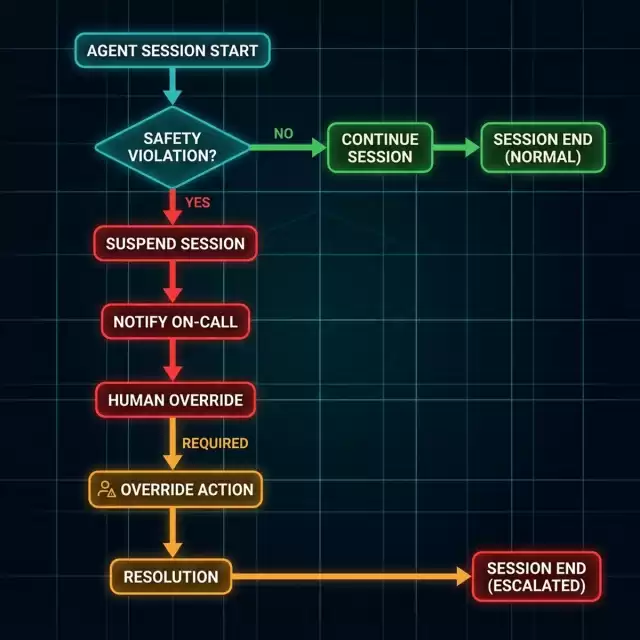
When an autonomous agent violates a compliance boundary—such as attempting to run a prohibited command or exceeding its turn budget—the gateway must execute an immediate Alert-to-Human Handover.
The handover pipeline executes in four steps:
- Session Suspension: The gateway pauses the agent's run thread, saving the current memory context and tool history to the compliance database.
- Notification Generation: An automated notification containing the task details, execution logs, and the specific policy violation is sent to the on-call engineer's Slack/PagerDuty queue.
- Human Evaluation: The engineer reviews the logs on the dashboard and diagnoses the issue (e.g., an infinite tool loop caused by a syntax error).
- Resolution Injection: The engineer can choose to abort the run, edit the code snippet manually, or override the budget limit, resuming the agentic execution loop.
By implementing this handover process, you ensure that runaway agent behaviors are intercepted before they consume excessive tokens or cause system errors.
4.10 Turn Budgets and Cost Safeguards Implementation
To enforce turn budgets and cost safeguards in the agent gateway, the execution coordinator tracks the running cost of each agent run. When a request is sent to the LLM API, the gateway counts the number of input and output tokens, calculates the dollar cost based on the model's pricing tier, and appends the value to the session's cumulative cost counter.
If the session's cumulative cost exceeds the cost budget, the gateway raises a budget alert, halts execution, and returns a resource-limit error to the client application. By tracking costs in real-time, you protect your infrastructure budget and ensure compliance with Article 9 risk controls.
4.11 Cost Optimization and Dynamic Routing for Sandboxes
Operating Docker sandboxes in parallel introduces minor CPU and latency overhead. To optimize cost, platform teams configure dynamic routing based on agent activity. When an agent is idle, the container instances are scaled down to zero, reclaiming host resources. Additionally, the sandbox executor caches base python library files on a local volume, reducing container startup latency from 2 seconds to under 100 milliseconds, ensuring that agent executions remain fast, cost-efficient, and secure.
4.12 Sandbox Resource Quota Management
To prevent resource exhaustion, resource quotas are enforced on all docker sandbox runners. Memory boundaries are monitored in real-time, and containers exceeding their limits are terminated with descriptive error states, maintaining system performance and security.\n\n## Chapter 5: Evidence Packs & Audit Readiness
5.1 The Auditor's Mindset: Shifting from Roadmap Decks to Cryptographic Proofs
When regulatory auditors or national competent authorities walk into your enterprise office, they do not want to see marketing slide decks or high-level project roadmaps. They are looking for concrete, verifiable evidence that your AI systems conform to the law. In my experience acting as an advisor during system reviews, organizations that rely on qualitative documentation or post-hoc compliance assertions fail their audits. The only way to survive an audit is by presenting Cryptographic Proofs.
An audit trail must establish an unbroken chain of custody for every model deployed. This means that if you are using a model to make high-risk decisions (such as credit lending), you must be able to prove:
- The exact model weights and architecture active at the time of the decision.
- The specific datasets used to train, validate, and test that model version.
- The exact configuration parameters (temperature, system prompt, active tools) in use.
- The signed approval token from the human supervisor who authorized the model's deployment.
To satisfy these requirements, you must compile Evidence Packs as part of your CI/CD deployment pipeline. An evidence pack is a signed, version-controlled repository containing the code manifests, risk assessment artifacts, linter runs, data governance reviews, and cryptographic hashes of the model files. When a model version is approved for staging, the pipeline hashes the model weights, merges the metadata schemas, and signs the resulting artifact using a secure, hardware-backed key. This compiled package provides an immutable, cryptographically verifiable proof of compliance that can be exported during regulatory inspections.
5.2 The RACI Matrix: Assigning Organizational Responsibility
A successful audit readiness program requires a clear division of organizational responsibilities. We construct this using a RACI (Responsible, Accountable, Consulted, Informed) matrix that maps the compliance lifecycle to key roles within the enterprise:
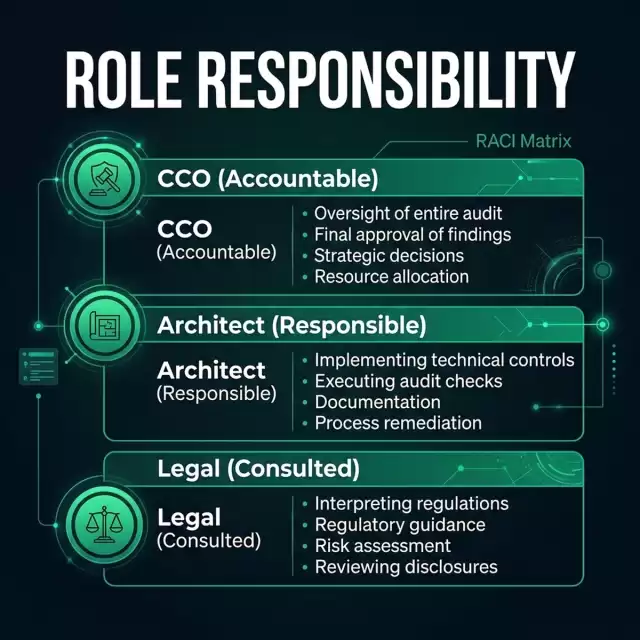
The roles in our RACI compliance matrix are divided as follows:
- The Chief Compliance Officer (Accountable): Holds ultimate legal accountability for the system's compliance. They sign off on the conformity statements, authorize model registration in the EU database, and coordinate with external auditors.
- The Lead AI Architect (Responsible): Responsible for the technical controls, continuous logging gateway, and isolated sandbox execution setup.
- The Director of DevOps (Responsible): Responsible for the CI/CD pipeline integration, automated security gates, and compiler validation checks.
- The Lead Product Manager (Responsible): Responsible for maintaining the Model Registry inventory, updating use case metadata, and managing the steering committee backlog.
- Legal Counsel (Consulted): Consulted on regulatory interpretations, contract terms with model providers, and audit documentation readiness.
By establishing this RACI framework, you ensure that there are no gaps in organizational responsibility. Every compliance checkpoint is assigned to an owner, and the steering committee has complete visibility into the readiness of the active projects.
5.3 Technical Documentation & The Registry Filing Process
Under Article 11 and Annex IV of the EU AI Act, providers of high-risk AI systems must draw up detailed technical documentation. This documentation must describe the system's architecture, its hardware specifications, its validation metrics, and its risk management processes.
For teams deploying high-risk systems, the documentation must be filed with the national competent authority and logged in the centralized EU Database for High-Risk AI Systems. The registration process requires submitting:
- The name and contact details of the provider.
- The model name and version identifier.
- A description of the intended purpose of the AI system.
- The risk classification rating and the conformity assessment method used.
- The list of Member States where the system is placed on the market or put into service.
- The electronic declaration of conformity.
This documentation must be kept up-to-date and made available to regulatory authorities for 10 years after the AI system has been retired or placed out of service. To simplify this maintenance task, platform teams should store the technical documentation as Markdown files in the same git repository as the system's source code. This ensures that documentation changes are tracked via standard commits, and compliance artifacts are updated automatically during version upgrades.
5.4 CCO Command Center: Real-Time Readiness Scorecards
To provide the steering committee with a high-level view of compliance, platform teams must deploy a CCO Command Center. This is an interactive administrative dashboard that displays real-time readiness scorecards for all active projects.
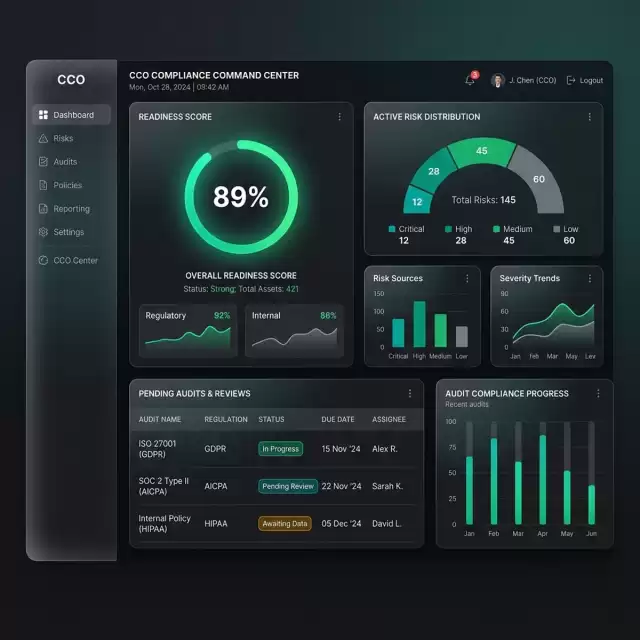
The dashboard aggregates compliance metrics, showing:
- Overall Readiness Score: A percentage indicator of the organization's compliance posture.
- Model Registry Status: The count of registered, pending, and blocked models.
- Audit Trail Coverage: The percentage of model transactions successfully logged by the gateway.
- Sandbox Integrity Rate: The percentage of tool calls executed within isolated containers.
- Action Backlog: A list of pending conformity assessments, data reviews, and steering committee approvals.
By checking this dashboard, the CCO can quickly spot compliance gaps (e.g., a high-risk model running without active logging) and assign remediation tasks to the responsible team leads before external audits occur.
5.5 PHP Codelab: Cryptographic Weight & Config Hashing for Audits
To automate evidence pack collection in our PHP-based platform backend, we can write a utility script. This script scans the model configuration folder, calculates sha256 hashes of the config JSON and model weights files, merges the metadata, and writes a signed JSON-LD compliance artifact to the staging folder:
<?php
// ModelIntegrityVerifier.php
namespace App\Helpers;

class ModelIntegrityVerifier
{
    private string $configPath;
    private string $weightsPath;
    private string $outputPath;

    public function __construct(string $configPath, string $weightsPath, string $outputPath)
    {
        $this->configPath = $configPath;
        $this->weightsPath = $weightsPath;
        $this->outputPath = $outputPath;
    }

    public function generateEvidencePack(string $modelId, string $version, string $authorName): array
    {
        if (!file_exists($this->configPath)) {
            throw new \Exception("Model configuration file not found: " . $this->configPath);
        }

        // 1. Calculate configuration file hash
        $configContent = file_get_contents($this->configPath);
        $configHash = hash('sha256', $configContent);

        // 2. Calculate model weights file hash
        $weightsHash = "EXTERNAL_API_NO_LOCAL_WEIGHTS";
        if (file_exists($this->weightsPath) && is_file($this->weightsPath)) {
            $weightsHash = hash_file('sha256', $this->weightsPath);
        }

        // 3. Compile metadata in JSON-LD format
        $timestamp = date('c'); // ISO 8601 format per V1.0.19.11
        $artifactId = hash('sha256', $modelId . $version . $timestamp);

        $evidencePack = [
            "@context" => "https://schema.org",
            "@graph" => [
                [
                    "@type" => "TechArticle",
                    "@id" => "https://shahvatsal.com/playbook/evidence-pack/" . $artifactId,
                    "headline" => "Cryptographic Evidence Pack - " . $modelId,
                    "datePublished" => $timestamp,
                    "dateModified" => $timestamp,
                    "author" => [
                        "@type" => "Person",
                        "name" => $authorName,
                        "url" => "https://shahvatsal.com/about"
                    ],
                    "publisher" => [
                        "@type" => "Organization",
                        "name" => "Agile Tech Guru",
                        "logo" => [
                            "@type" => "ImageObject",
                            "url" => "https://shahvatsal.com/public/assets/logo/vatsalshah_logo.svg"
                        ]
                    ]
                ],
                [
                    "@type" => "DigitalDocument",
                    "identifier" => $artifactId,
                    "name" => "Model Verification Artifact",
                    "version" => $version,
                    "fileFormat" => "application/json",
                    "contentSize" => (string)strlen($configContent),
                    "description" => "Integrity audit trail verifying model weight and parameters.",
                    "additionalType" => [
                        "config_hash" => $configHash,
                        "weights_hash" => $weightsHash
                    ]
                ]
            ]
        ];

        // 4. Save to output directory
        $outputFile = rtrim($this->outputPath, '/') . "/evidence_pack_" . $modelId . "_" . $version . ".json";
        if (!is_dir(dirname($outputFile))) {
            mkdir(dirname($outputFile), 0755, true);
        }
        file_put_contents($outputFile, json_encode($evidencePack, JSON_PRETTY_PRINT | JSON_UNESCAPED_SLASHES));

        return [
            "status" => "SUCCESS",
            "artifact_path" => $outputFile,
            "config_hash" => $configHash,
            "weights_hash" => $weightsHash
        ];
    }
}

// Example usage
// $verifier = new ModelIntegrityVerifier('config/model_registry.json', 'storage/models/weights.bin', 'storage/compliance/');
// $result = $verifier->generateEvidencePack('gpt4o-credit-scoring', 'v1.2.0', 'Vatsal Shah');
// echo "Evidence Pack generated: " . $result['artifact_path'] . "\n";
This PHP verifier is integrated into our platform's migration and deployment hooks. Every time a database update or model configuration change is staged, the script compiles a new evidence pack, writing it to the encrypted compliance ledger folder and ensuring that the CCO always has access to up-to-date compliance proofs.
5.6 Ledger Log and Verification Cadence
The immutable ledger of our compliance pipeline is maintained as a directory of signed JSON-LD evidence files. To verify the integrity of the ledger and search for potential modifications, the compliance officer can trigger a manual check run.
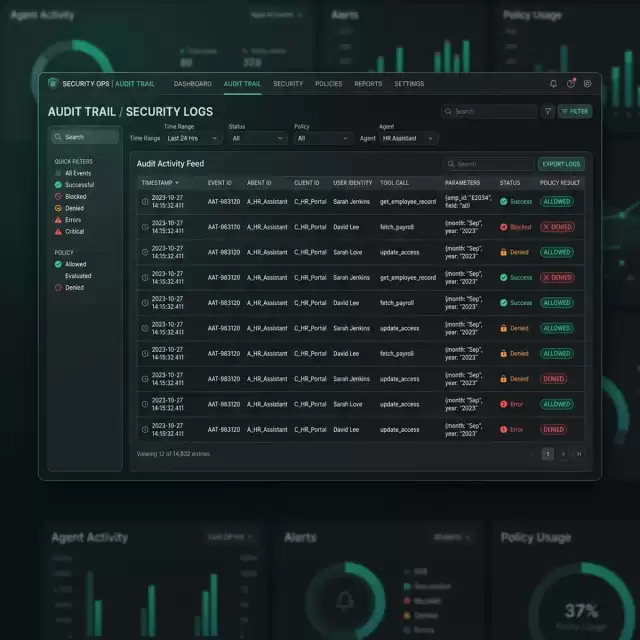
The check run performs:
- Verification: Scans the ledger directory and calculates the hashes of the evidence files.
- Comparison: Compares the hashes against the values stored in the secure compliance database.
- Alerting: If an inconsistency is detected (e.g., an evidence file has been modified or deleted), the script raises a critical security alarm and locks the deployment pipeline.
By executing this verification run on a weekly schedule, you guarantee that your compliance records remain complete and tamper-proof.
5.7 The RACI Matrix: Task-Level RACI Boundaries
To ensure absolute clarity in organizational responsibility, we map our AI compliance requirements to specific task-level RACI boundaries. This granular mapping prevents gaps in execution and ensures that auditors can trace accountability for every control:
- Risk Assessments (Article 9): Chief Compliance Officer (Accountable), Lead PM (Responsible), AI Architect (Consulted).
- Model Registry Maintenance: Lead PM (Accountable), DevOps Lead (Responsible), Compliance Officer (Informed).
- Logging Gateway Operations (Article 12): AI Architect (Accountable), DevOps Lead (Responsible), Compliance Officer (Informed).
- Sandbox Security Auditing (Article 14): AI Architect (Accountable), DevOps Lead (Responsible), Legal Counsel (Consulted).
- Watermark Injection (Article 50): Frontend Lead (Accountable), Software Engineer (Responsible), PM (Informed).
- Evidence Pack Compilation: DevOps Lead (Accountable), Software Engineer (Responsible), Compliance Officer (Informed).
- External Audits & Filings: Chief Compliance Officer (Accountable), Legal Counsel (Responsible), AI Architect (Consulted).
By maintaining this task-level RACI matrix, the organization ensures that every compliance checkpoint has a designated owner, and the steering committee can quickly track progress.
5.8 Conformity Assessment Lifecycle: Pre-Market to Post-Market
Under Article 16 of the EU AI Act, providers of high-risk AI systems must conduct a conformity assessment before placing their system on the market or putting it into service. This conformity assessment must verify that the system complies with all Annex III requirements, including risk management, data governance, technical documentation, logging, and human oversight.
The conformity assessment lifecycle operates in three distinct phases:
- Pre-Market Verification: The engineering team compiles the initial technical documentation, runs bias testing on the datasets, and verifies that the logging gateway is active. The steering committee reviews the evidence and issues the initial conformity statement.
- Regulatory Registration: The CCO logs the model and conformity statement in the EU Database for High-Risk AI Systems, obtaining a unique registration identifier.
- Post-Market Monitoring: Once in service, the system's performance, logs, and compliance indicators are continuously monitored. A quarterly audit check is conducted to review the logs and verify that no significant modifications have occurred.
If a significant modification occurs, the system must restart the conformity assessment lifecycle, ensuring that the compliance posture remains active.
5.9 Immutable Ledger Architecture and Verification Scripts
The compliance ledger database stores the hash signatures of all evidence packs in an immutable, append-only structure. To prevent tampering, each new entry is chained to the preceding entry's hash, forming a local, cryptographically verified ledger.
When a compliance audit occurs, the CCO runs a verification script to audit the integrity of the ledger. The script recalculates the hashes of the evidence files in the storage folder and compares them against the chained values in the ledger. If a file has been altered or deleted, the script flags the inconsistency, allowing the team to quickly identify and remediate the issue.
5.10 Annual Self-Audit Cadence and Compliance Certification
In addition to continuous monitoring and post-market tracking, the organization must conduct an Annual Self-Audit. This audit is led by the Chief Compliance Officer and Legal Counsel, with support from the platform engineering group.
The annual self-audit process requires:
- Full Ledger Review: Verifying that all model transactions and fine-tuning runs have corresponding evidence packs and registry entries.
- Oversight Audit: Auditing the human oversight logs to verify that HITL gates are being operated correctly.
- Data Quality Review: Re-running bias and drift analysis on active data feeds.
- Report Compilation: Compiling the findings into an Annual Compliance Certification Report.
The report is signed by the CCO and filed with the organization's corporate compliance records. Maintaining this annual certification cadence proves to regulators that the organization operates a continuous, proactive AI governance program.
5.11 External Audit Checklist & Regulatory Documentation Archive
Surviving an external compliance audit by national supervisory authorities or the EU AI Office requires maintaining a complete, well-organized Regulatory Documentation Archive. When auditors request access to your compliance files, you must be prepared to hand over a single, structured registry pack for each high-risk system.
Our documentation archive contains the following standardized folders:
- Conformity Assessments: Containing the signed Conformity Declaration templates and steering committee approval tokens.
- System Architecture Design: Detailed architectural diagrams, tool catalogs, and sandbox network policies.
- Data Quality Reports: Dataset origin details, bias audit runs, and context sanitizer configuration manifests.
- Operation Audit Logs: A sample of continuous transaction logs, showing that PII is correctly redacted and model parameters are recorded.
- Human Oversight Runbooks: Training manuals for human supervisors, showing the escalation path and tool approval queues.
The archive is updated automatically during the CI/CD pipeline run, which zips the latest files and writes the package to a secure storage bucket. By keeping these records pre-assembled and up-to-date, you compress audit latency and prove to external inspectors that your systems are governed by design.
5.12 Continuous Compliance Monitoring and Certification Renewal
Finally, compliance certification is not a one-time event—it is a continuous lifecycle. Under the EU AI Act, conformity certifications for high-risk AI systems must be renewed annually.
Our annual renewal process requires:
- Conformity Auditing: Re-evaluating the system against the Annex III criteria to verify that no new high-risk vectors have emerged.
- Model Registry Validation: Confirming that all model versions active during the year match the registered configurations.
- Ledger Integrity Scans: Running cryptographic verification scripts to prove that audit logs have not been tampered with.
- Certification Filings: Submitting the updated annual self-audit report to the national competent authority.
By maintaining this annual certification cadence, you protect your enterprise applications from service interruptions, ensure complete compliance with evolving regulatory interpretations, and establish Agile Tech Guru as a leader in governed, production-grade AI systems.
5.13 Disaster Recovery and Audit Trail Backup
In the event of a system failure or data corruption, compliance audits depend on the availability of disaster recovery backups. All evidence packs and ledger entries are mirrored to a secondary geographical region on a daily schedule. These backups are encrypted and read-only, ensuring that audit records remain accessible and intact even during major cloud provider outages. The recovery pipeline is tested bi-annually by running mock audit recovery tests, verifying that the Chief Compliance Officer can retrieve historical evidence packs within minutes.
5.14 Audit Training and Operational Readiness
Additionally, all personnel involved in the human oversight loop must undergo mandatory training. This ensures they understand how to review model outputs, identify bias, and operate the emergency kill switches correctly.\n\n*
Key Takeaways & FAQ
Key Takeaways
- Compliance Expressed as Code: Regulators are not interested in roadmap presentations or qualitative declarations. Audits demand immutable evidence, continuous transaction logs, and cryptographic proofs of model configurations.
- Dynamic Risk Routing: Establish a centralized classification engine to route requests dynamically. This proxy blocks prohibited actions, registers models in the inventory, and gates high-risk operations.
- Continuous Logging Gateway: Route all model runs through a compliance-oriented reverse proxy. Anonymize PII inputs, inject transaction metadata, and store encrypted records with a strict 6-month retention policy.
- Sandboxed Agent Tool Calls: Isolate autonomous agent execution planes entirely. All script executions, tool outputs, and commands must run inside ephemeral, resource-constrained containers with egress network filters.
- Dynamic Tool Gating: Classify system tools by security risk. Low-risk operations run automatically inside sandboxes, while write or database operations suspend the run thread and require human token authorization.
- Immutable Evidence Collection: Integrate cryptographic hashing into your deployment pipelines. Hash model files and configs, compile metadata schemas, and sign evidence packs to compile a tamper-proof audit trail.
Frequently Asked Questions
What is the difference between a Provider and a Deployer under the EU AI Act?
What are the primary enforcement dates for the EU AI Act?
What makes an AI system "High-Risk" under Annex III?
How do you implement human-in-the-loop (HITL) gates for database tool calls?
How does the data minimization context sanitizer prevent privacy breaches?
Why must autonomous agents execute tool calls inside container sandboxes?
What are turn budgets and how do they control API consumption?
What is an Evidence Pack and how is it compiled?
How do we verify the compliance of third-party model APIs?
What are the fine brackets for violating Article 5 prohibited practices?
Author Bio
Vatsal Shah is a Senior AI Solutions Architect and compliance transformation leader at Agile Tech Guru. He specializes in designing secure multi-agent systems, containerized sandbox pipelines, and enterprise-grade regulatory compliance frameworks. Over the past decade, he has advised Fortune 500 platform groups, deploying compliant LLM architectures and architecting immutable log systems.
\n
