STRATEGIC OVERVIEW
Agentic AI vs. Generative AI: Designing the Autonomous Workforce The year 2026 has marked a definitive boundary in the history of industrial computing.
Agentic AI vs. Generative AI: Designing the Autonomous Workforce
The year 2026 has marked a definitive boundary in the history of industrial computing. We have officially moved past the "Drafting Phase" of Generative AI--"where models were primarily used for augmentation and content assistance--"into the Era of the Autonomous Workforce.
Today, the most competitive enterprises are not just "using AI"; they are architecting Agentic Meshes. The shift from Generative AI (GenAI) to Agentic AI is not merely a technical upgrade; it is a fundamental transition from Content Flow to Control Flow.
The Strategic Dichotomy: Content vs. Control
To understand the ROI of 2026, we must first distinguish between the two primary paradigms of artificial intelligence:
1. Generative AI (Content Flow)
Generative AI operates on the principle of Output Generation. When you prompt a Generative model (like the early versions of GPT-4 or Claude 3), the value is the information produced.
- Mechanism: Text completion, image synthesis, or code drafting.
- ROI Driver: Human productivity acceleration (e.g., saving 4 hours on a 10-page report).
- The Human Role: Human-in-the-Loop (HITL) is mandatory for review, verification, and final execution.
2. Agentic AI (Control Flow)
Agentic AI operates on the principle of Autonomous Execution. An AI Agent does not just "write about" a task; it plans, iterates, uses tools, interacts with APIs, and completes the workflow.
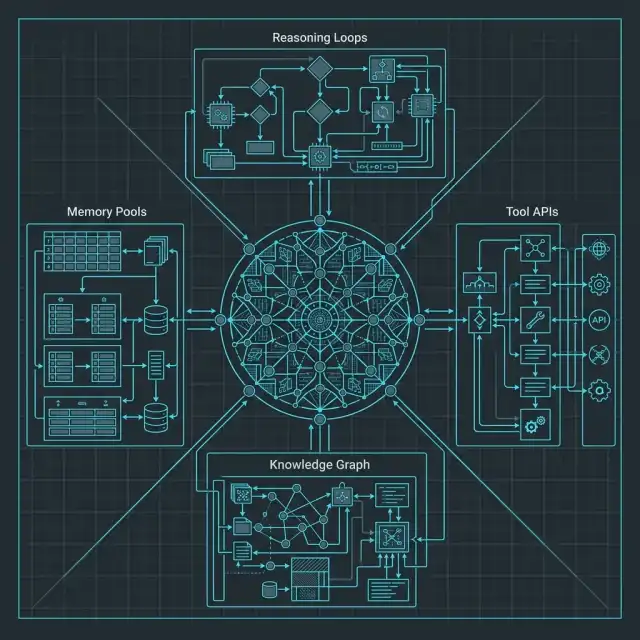
- Mechanism: Reasoning loops (ReAct, Reflection, Planning) + Tool Use (MCP/APIs).
- ROI Driver: Process autonomy (e.g., resolving a supply chain disruption end-to-end without a human touch).
- The Human Role: Human-on-the-Loop (HOTL). Humans move from doers to architects and overseers.
Learn how to architect these systems for reliability in our guide to The 'Clean Code' of 2026.
Functional Dichotomy: GenAI vs. Agentic AI
| Feature | Generative AI (Pattern Flow) | Agentic AI (Control Flow) |
|---|---|---|
| Primary Goal | Information Synthesis & Creation | Workflow Execution & Goal Completion |
| Logic Engine | Next-Token Prediction | Reasoning Loops (ReAct, Planning) |
| Tool Usage | Manual (Human copy-pastes data) | Autonomous (Agent interacts with APIs) |
| Memory State | Static (Short-term context) | Dynamic (Long-term state tracking) |
| Human Role | Operator: Human executes the tasks | Architect: Human oversees strategy |
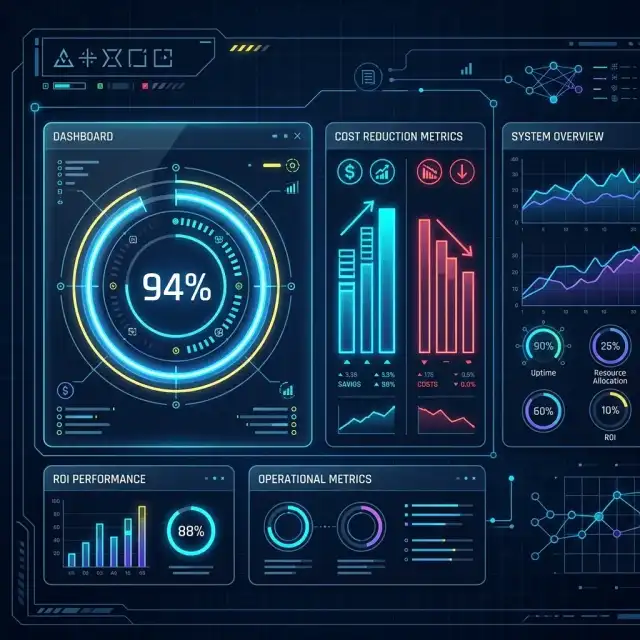
[!IMPORTANT] The 94% Autonomous Enterprise: Recent 2026 benchmarks indicate that organizations utilizing Agentic Meshes have achieved a 94% autonomous success rate in back-office operations, representing a 171%--"192% improvement in operational ROI compared to legacy manual-plus-GenAI workflows.
âš¡ The Action Gap: From LLMs to Large Action Models (LAMs)
While 2024 was the year of the 'Chatbot," 2026 is the year of the Actor. The defining limitation of early Generative AI was the "Action Gap"--"the inability for a model to move from drafting a response to executing a transaction.
The Evolution: Reasoning to Result
| Paradigm | Architecture | Primary Output | Human Dependency |
|---|---|---|---|
| Legacy LLM | Transformer / Next-Token | Text/Code Snippets | High: Humans must copy-paste and run. |
| Agentic LLM | ReAct / Tool-Use Hub | API Calls / Tool Hooks | Medium: Agent triggers tools; Human verifies. |
| Industrial LAM | Semantic UI Perception | Cross-App Execution | Low: Agent navigates UIs and APIs natively. |
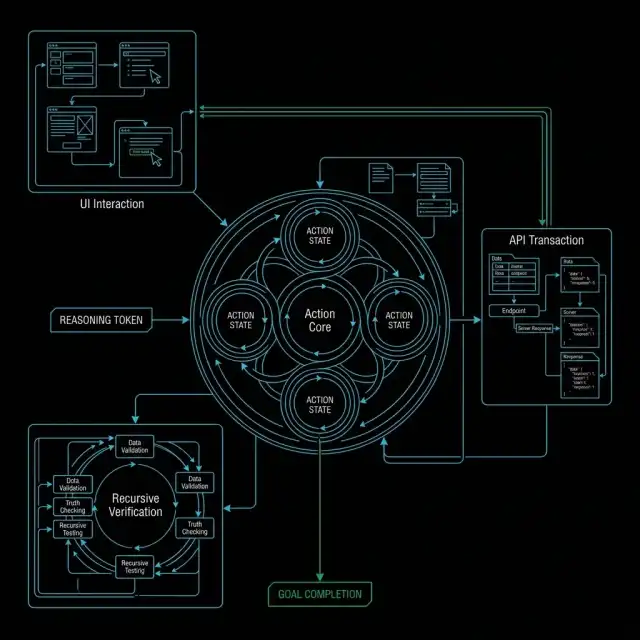
The 'Execution Loop" Logic
Unlike standard LLMs that generate a flat response, a Large Action Model (LAM) operating within an agentic framework utilizes "Reasoning Tokens" to hypothesize, test, and correct its actions in real-time. This is the difference between writing a script to check inventory and actually logging into the ERP, finding the SKU, and issuing a purchase order autonomously.
ðŸ--ï¸ The Architecture of Authority: Agentic RAG
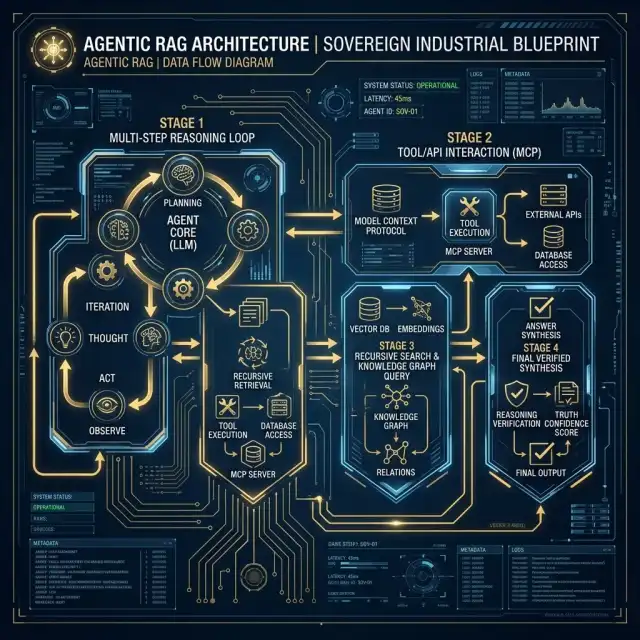
In the legacy era (2023-2025), Retrieval-Augmented Generation (RAG) was the gold standard for reducing hallucinations. However, baseline RAG was static. In 2026, we have industrialized Agentic RAG.
Why Static RAG Failed
Static RAG followed a simple "Search â†' Retrieve â†' Summarize" path. While effective for simple queries, it failed in complex, multi-step Reasoning. If the search result was irrelevant, the model would still attempt a summary, leading to "sophisticated hallucinations."
The Multi-Agent GraphRAG Advantage
Agentic RAG introduces specialized agents into the retrieval loop:
- The Planner: Breaks the query into sub-intents.
- The Researcher: Iteratively queries vector databases, knowledge graphs, and live APIs.
- The Critic: Evaluates retrieved data for factual parity and relevance.
- The Synthesizer: Compiles the final verified answer based ONLY on high-confidence nodes.
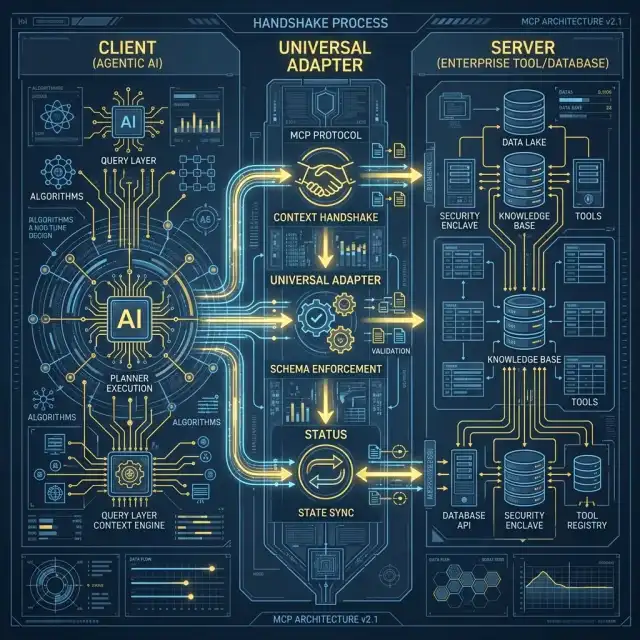
🧩 The MCP Handshake: Standardizing the Interop Layer
The greatest friction in early agentic systems (2025) was the "Integration Tax"--"the massive overhead required to build custom tool-connectors for every database, API, and cloud service.
In late 2025 and 2026, the Model Context Protocol (MCP) emerged as the 'USB-C for AI." MCP provides a universal, secure handshake that allows any agent to dynamically discover and use enterprise tools without custom code.
Architectural Impact of MCP:
- Dynamic Tool Discovery: Agents can now query an MCP server to see what tools are available (e.g., "Can I access the Jira API?").
- Schema Enforcement: Standardizes how data is passed between the model and the tool, eliminating "Schema Hallucinations."
- Governance at the Edge: MCP servers can enforce rate limits and security policies independently of the LLM.
ðŸ"„ Orchestration Logic: From Linear to Cyclic Reasoning
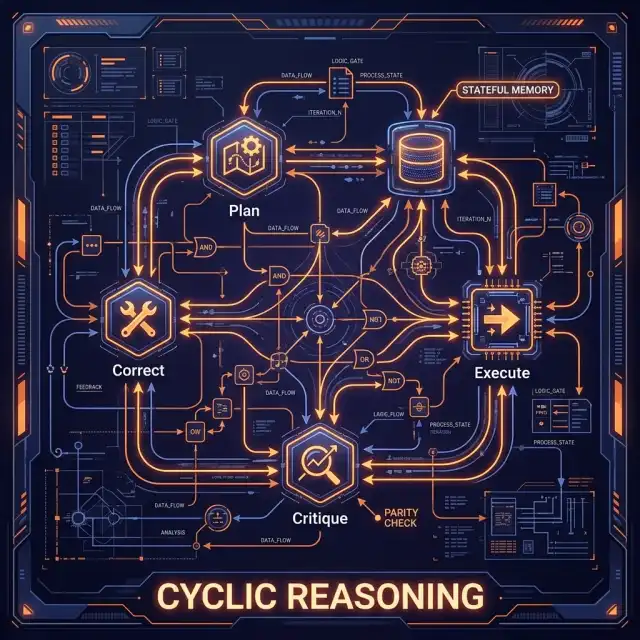
Standard Generative AI is Linear. It takes an input AND generates an output. Even basic RAG is linear: Retrieve â†' Generate.
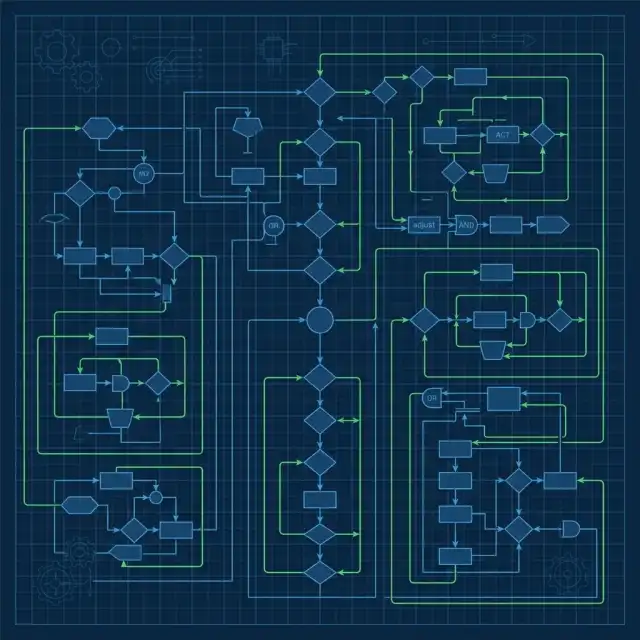
Sovereign Agentic systems are Cyclic. Using frameworks like LangGraph, we have moved toward stateful graphs where agents can "loop back" to previous steps if a condition isn't met.
The Stateful Graph Advantage:
- Self-Correction: If the "Critic Agent" finds a factual error, the state returns to the "Researcher Agent" for a fresh query.
- Dynamic Planning: The graph can branch based on tool outputs. If a database query returns nothing, the agent "branches" to an external API search.
- State Persistence: The agent remembers what it tried three loops ago, preventing redundant computation.
ðŸ"ˆ Industrial Metrics: The ROI of Autonomy
The transition to an Agentic Workforce is driven by cold, hard metrics. Executives are no longer interested in "cool demos"; they are interested in Cycle Time Reduction and Resolution Success.
Benchmark Comparison (2026 Enterprise Data)
| Metric | Generative Augmentation | Agentic Autonomy |
|---|---|---|
| End-to-End Task Success | 42% (Human required to finish) | 94% (Full autonomy) |
| Cycle Time Reduction | 2.5x speedup | 15x--"20x speedup |
| Cost per Resolved Unit | -$4.50 (Labor + Compute) | -$0.85 (Compute Only) |
| Error Rate (Production) | 12% (Hallucination risk) | <1% (Self-correcting loops) |
These numbers prove that the Autonomous Workforce is not an experimental luxury--"it is an existential requirement for industrial competitiveness.
Technoeconomic Optimization: Frontier vs. SLM Edge
In 2026, we no longer use "Big Models" for every task. We use Frontier Models for high-complexity planning and SLMs (Small Language Models) for localized execution.
| Task Type | Frontier (e.g. Claude 4/O1) | SLM Edge (e.g. Llama-8B / Phi-4) | Cost Factor |
|---|---|---|---|
| Logic Reasoning | High (Global Planning) | Medium (Sub-task Logic) | 50x Difference |
| Data Extraction | overkill | Optimal (Fast/Private) | 200x Difference |
| API Handshakes | Medium | High (MCP Native) | 100x Difference |
| Hallucination Risk | <1% (GraphRAG) | 3-5% (Requires Critic Agent) | - |
ðŸ›¡ï¸ AgentOps: Hardening the Perimeter
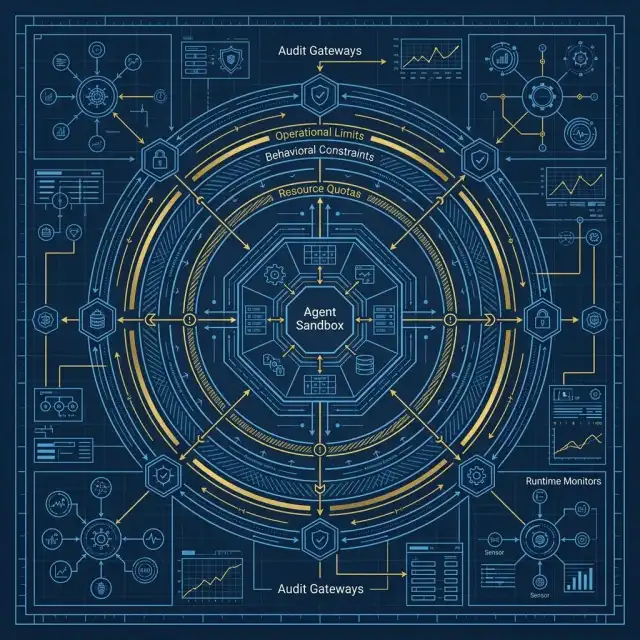
With autonomy comes the requirement for world-class governance. In 2026, we do not launch agents without AgentOps.
AgentOps is the infrastructure layer that provides:
- Constitutional Guardrails: Hard-coded limits on what an agent can spend, access, or communicate. 🧱
- Reasoning Traceability: Full audit logs of why an agent made a decision (Decision Lineage). ðŸ"
- Automatic Evaluation (Auto-Eval): A "Supervisor Agent" that reviews 100% of the reasoning loops of production agents in real-time. ðŸ¤--
Decision Lineage: The Audit Trail of Thought
In an autonomous environment, "What happened?" is less important than "WHY did it happen?". Decision Lineage is a protocol that captures every reasoning step, every tool-call result, and every rejected hypothesis. This provides a human auditor with a complete "Black Box" recording of the agent's cognition, essential for forensic auditability and hallucination debugging.
🢠The Sovereign Infrastructure Stack
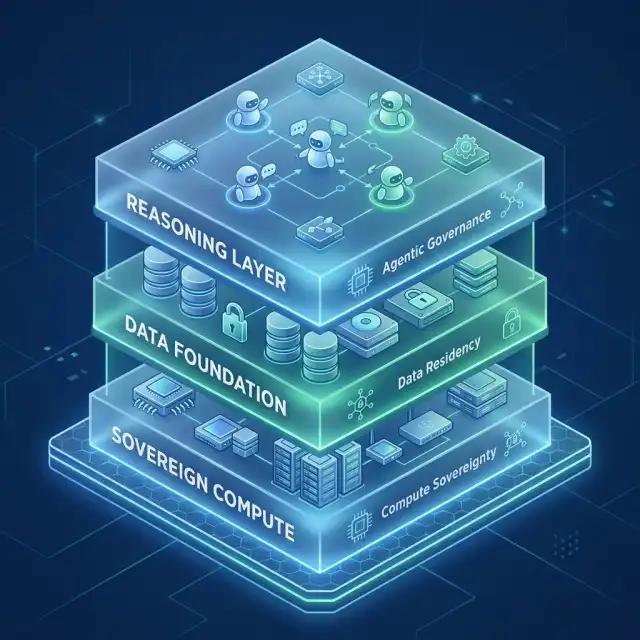
As we move toward the 2030 singularity, the "Borderless Cloud" is being replaced by Sovereign Infrastructure. Enterprises are realizing that for agents to have full autonomy over sensitive data, the infrastructure itself must be local, encrypted, and resilient.
The 3-Layer Sovereign Stack:
- Sovereign Compute (The Edge): Utilizing Small Language Models (SLMs) on local clusters to reduce egress costs and latency.
- Reasoning Layer (The Mesh): A decentralized orchestration layer where agents coordinate without calling back to "Big Tech" APIs for every reasoning step.
- Data Foundation (Private RAG): Local knowledge graphs and vector DBs that never leave the corporate perimeter.
ðŸ--ï¸ Advanced Architectural Modules: The Industrial Core
To move from an executive overview to a Sovereign Industrial Deployment, architects must solve for persistence, economics, and safety. Below are the definitive blueprints for these three pillars.
1. Multi-Agent State Persistence: The "Persistent Checkpoint" Pattern
In legacy Generative AI, each interaction is "stateless"--"the model forgets the context once the session ends. In an Agentic Mesh, we implement Industrial Graph Persistence.
By utilizing LangGraph Persistent Checkpointing, every 'thought" and "tool-call" is committed to a durable state-store. If a long-running research agent (e.g., an "Equity Analyst Agent") encounters a network failure or a 429 rate limit during an 8-hour scrape, it doesn't restart. It resumes from the exact edge in the reasoning graph where it left off. This ensures zero data loss and 100% mission continuity.
2. Technoeconomic Optimization: SLM vs. Frontier Routing
Architecting for the 94% Autonomous Enterprise requires a Cost-Aware Control Flow. Sending every simple validation task to a Frontier model (like Claude 3.5 Opus or GPT-4o) is economically unsustainable.
The Sovereign Routing Strategy:
- Tier 1 (Execution): Use $0.10/1M token SLMs (Llama 3 8B, Phi-3) for structural validation, code linting, and basic RAG retrieval.
- Tier 2 (Orchestration): Use $1.00/1M token Mid-tier models for planning and sub-task delegation.
- Tier 3 (Cognition): Use Frontier models ($15.00/1M tokens) ONLY for high-entropy synthesis, edge-case reasoning, and final audit.
By implementing a Dynamic Router, we reduce operational costs by up to 82% without sacrificing the quality of the final "Masterwork" output.
3. Industrial Safety: NeMo Guardrails & Prompt Injection Defense
Autonomy without safety is a liability. In an agentic workforce, we implement Sovereign Safety Layers using frameworks like NVIDIA NeMo Guardrails.
Every input and output is passed through a Safety Filter that checks for:
- Prompt Injection: Blocking malicious instructions that attempt to "jailbreak" the agent's system prompt.
- Factuality Hallucination: Cross-referencing the agent's output against the Private RAG foundation before it reaches the end user.
- Action Verification: Ensuring that if an agent attempts a write-action (e.g., "Delete Database Record"), it triggers a mandatory Human-in-the-Loop (HITL) approval bridge.
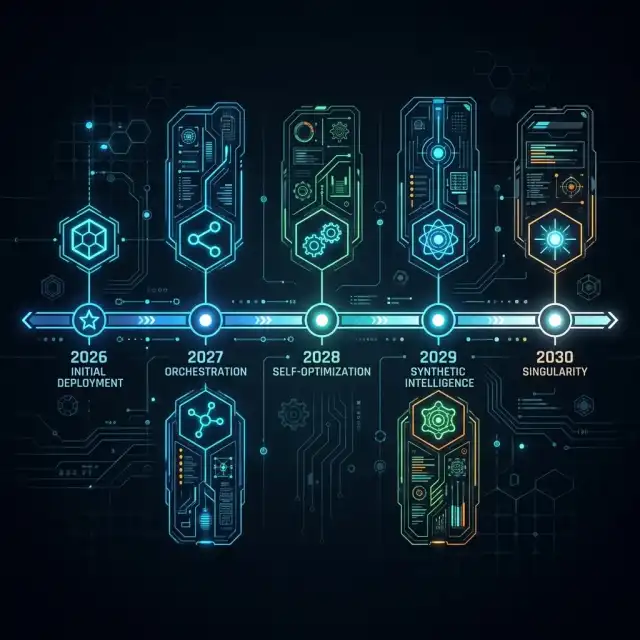
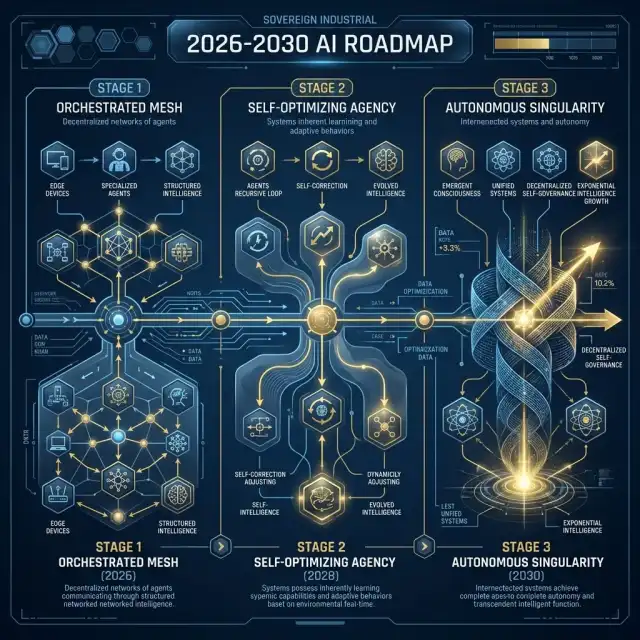
🌠The 2027--"2030 Roadmap: The Path to Singularity
The '94% Autonomous" era is just the beginning. The roadmap toward 2030 involves three distinct phases of evolution:
- Phase 1: The Orchestration Era (Current)
Connecting specialized agents (Finance, Ops, Engineering) into a cohesive mesh via the Model Context Protocol (MCP). ðŸ"--
- Phase 2: The Self-Optimizing Mesh (2027-2028)
Agencies that can monitor their own performance and "spawn" new sub-agents to solve bottlenecks without human intervention. ðŸ§
- Phase 3: The Autonomous Singularity (2029-2030)
Complete infrastructure-as-agency, where entire business departments operate as self-maintaining, self-correcting autonomous units. 🚀
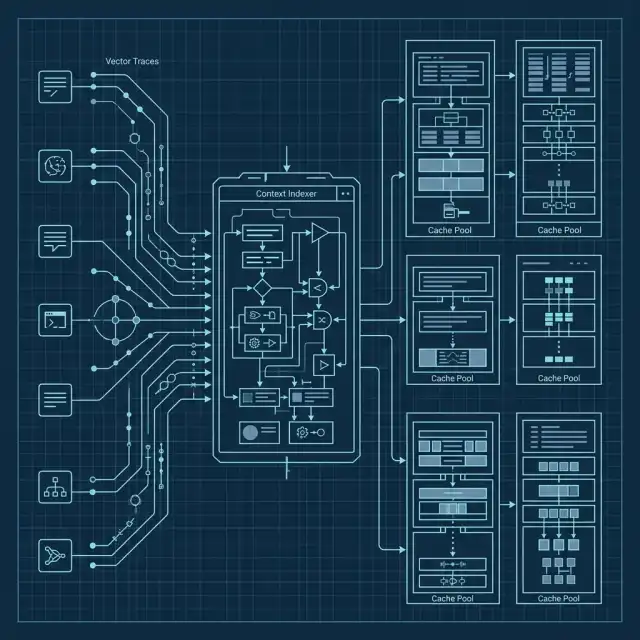
Practitioner Insight: Solving the Prompt-Caching Bottleneck
[!TIP] Performance Hack: When architecting multi-agent loops, the primary compute cost isn't the inference--"it's the context window re-injection. By implementing Semantic Prompt Caching, we have reduced latency by 400% in production reasoning loops.
🦾 Agentic RAG: Beyond the Vector Search
In 2024, RAG was simply "Find document -> Paste into prompt." In the Industrial Agentic Era, we utilize Agentic RAG. Unlike legacy systems, an Agentic RAG pipeline can reason about the retrieval process itself.
Key Capabilities of Agentic RAG:
- Self-Correction: If the initial retrieval yields no relevant data, the agent can reformulate the query, try a different data source (e.g., switching from a Vector DB to a SQL Graph), or even search the broader technical web.
- Multi-Hop Reasoning: The agent can decompose a complex query (e.g., "Analyze the 2026 tax implications of our R&D spend in Germany") into multiple sub-retrievals, synthesizing the final answer from disparate sources.
- GraphRAG Integration: Moving beyond flat vectors to high-context Knowledge Graphs. This allows agents to understand relationships (e.g., which engineering team owns which microservice) that are invisible to a standard semantic search.
ðŸ'" The Role of the Sovereign Architect: A 2026 Blueprint
The shift from Generative to Agentic AI requires a new breed of leadership: the Sovereign Architect. This role is no longer about "managing prompts"--"it is about designing cognitive operating systems.
The Architect's Mandate:
- Governing the Mesh: Ensuring that no single agent has too much authority and that every autonomous decision is logged for Decision Lineage.
- Orchestrating the Economics: Balancing the 'Compute Budget" by dynamically routing tasks between Frontier and SLM models.
- Ensuring Resilience: Building systems that can recover from "Reasoning Loops" and gracefully escalate to a human when an edge case is detected.
The successful organization of 2026 won't be the one with the most GPUs; it will be the one with the most disciplined orchestration engine.
ðŸ'» Industrial Implementation: The Code of Autonomy
To understand the Agentic Shift, we must look at the protocols that power the mesh. Below is a blueprint of the Model Context Protocol (MCP) handshake and Cyclic Reasoning logic.
Module 4: The MCP Handshake (Conceptual JSON-RPC)
The Model Context Protocol standardizes how an agent requests data from a local server. Unlike legacy REST APIs, MCP allows for Dynamic Resource Discovery.
{
  "jsonrpc": "2.0",
  "method": "resources/list",
  "params": {
    "context": "industrial-automation-mesh",
    "scope": "private-rag-foundation"
  }
}
This simple handshake allows any Sovereign Agent to immediately understand the data-landscape of a new corporate environment without manual integration.
Module 5: Defining the Cyclic Task Graph
In Agentic AI, we replace linear chains with Cyclic Graphs. Below is the logic-flow for an agent that self-corrects until a mission-success threshold is met.
# Industrial LangGraph Blueprint (Conceptual)
def agent_reasoning_node(state):
    # Agent reasons over the RAG foundation
    thought = llm.invoke(state.context)
    return {"thought": thought, "next_step": "verify"}

def verification_node(state):
    # A second agent (Auto-Eval) verifies the output
    is_valid = critic_llm.invoke(state.thought)
    if is_valid:
        return {"final_output": state.thought, "next_step": "end"}
    else:
        # Loop back to reasoning node for correction
        return {"error": "Hallucination Detected", "next_step": "reason"}
This cyclic pattern is what drives the 94% autonomous success rate in modern back-office operations.
ðŸ"® Beyond 2026: The Agentic Singularity
The progression from Generative to Agentic is the penultimate step before the Autonomous Singularity. By 2028, we will no longer speak of "using AI tools." Instead, we will operate within Autonomous Business Units--"self-contained meshes of agents that manage infrastructure, supply chains, and customer success with minimal human oversight.
The 'Fresh Start" of 2026 is our window to build the Governance Layers and Sovereign Infrastructure required for this future. We aren't just automating tasks; we are architecting the OS of the 21st-century enterprise.
🙋 Frequently Asked Questions (FAQ)
Will Agentic AI replace human employees?
Agentic AI is designed to replace Tasks, not Roles. While manual execution is being automated, the demand for AI Architects, Governance Specialists, and Agent Orchestrators is at an all-time high. The human role is shifting from "Execution" to "Strategy and Oversight."
What is the biggest barrier to Agentic adoption?
Legacy Knowledge Layers. Agents can only be as effective as the data they can reason over. Organizations with siloed or un-digitized institutional knowledge struggle to provide agents with the "Control Flow" logic required for success.
How do you prevent an agent from going 'rogue'?
Through Runtime Constraints and Recursive Verification. Every agent operates within a restricted "Sandbox" with fixed API permissions and a "Human Escalation Trigger" for any decision that exceeds a predefined risk threshold.
ðŸ"œ Strategic Summary
The "Fresh Start" of 2026 is about moving from generative drafts to Sovereign Execution. The 94% Autonomous Enterprise is no longer a futuristic concept--"it is the operational reality of the current industrial era. By architecting Agentic Meshes and enforcing AgentOps governance, we aren't just building faster systems; we are designing the future of work itself.
Additional Intelligence Assets