Agentic Commerce: Zero-Click Shopping Agents Redefine Retail SEO
By Vatsal Shah · June 4, 2026 · Cloud
What Happened
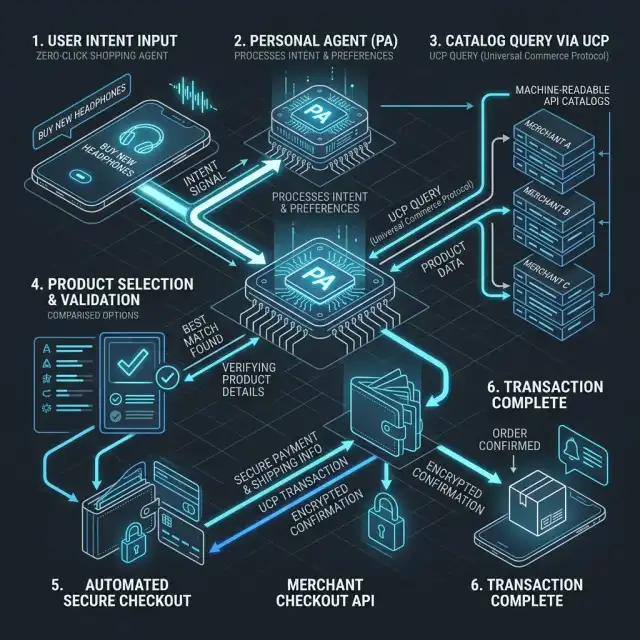
The traditional e-commerce search bar is becoming obsolete. Autonomous AI agents are taking over the consumer purchase journey, transitioning retail from search-based browsing to agentic commerce. Instead of a human shopper clicking through search engine results, comparing product reviews, and manually filling out checkout forms, personal shopping agents are executing these workflows autonomously.
Under this new paradigm, known as zero-click shopping, the user expresses high-level intent (e.g., "Order a replacement water filter for my model under $30 with next-day delivery"), and the agent handles the transaction silently. The agent queries machine-readable retailer endpoints, selects the optimal merchant based on structured criteria, coordinates secure payment via single-use virtual cards, and schedules delivery—all without the consumer ever visiting a retailer's website or generating a single click.

Technical Comparison
The emergence of agentic commerce changes the foundational rules of product discovery and checkout logic. The table below outlines how traditional web e-commerce compares to the machine-to-machine agentic commerce model:
| Operational Metric | Traditional E-commerce (Human-Led) | Agentic Commerce (Agent-Led) |
|---|---|---|
| Discovery Mechanism | Organic keyword search, backlinks, and ads | Machine-to-machine semantic parsing & API catalog queries |
| Purchase Friction | Manual cart additions, form fields, and security checks | Instant programmatic checkout via secure virtual tokens |
| Search Engine Strategy | Traditional SEO (Core Web Vitals, metadata, copy) | Agent Legibility (Structured JSON-LD, machine-readable feeds) |
| Optimization Focus | Consumer-facing page layout & UX design | Real-time pricing engines, inventory APIs, and UCP compliance |
| Key Performance Indicator | Pageviews, session duration, and cart abandon rate | Agent recommendation rates, API success, and margin velocity |
Why It Matters
As AI agents drive search traffic down, retail brands must optimize their backends for machine discovery rather than human browsing. The traditional focus on web page layouts is being replaced by a focus on API accessibility. To make products visible to autonomous agents, merchants are integrating with the Universal Commerce Protocol (UCP), an open-standard payload format that lets agents query product availability, negotiate bulk pricing, and retrieve logistics constraints programmatically.
This shift means that product description metadata, return policies, and stock updates must be served in clean, structured schemas. The following JSON payload illustrates a typical UCP query return, showing how a retailer's server exposes real-time catalog metrics to a shopping agent:
{
  "$schema": "https://universalcommerce.org/schemas/v2/product-offer.json",
  "productId": "sku_992837482-A",
  "status": "AVAILABLE",
  "inventory": {
    "inStock": 420,
    "leadTimeHours": 0
  },
  "pricing": {
    "basePrice": 24.99,
    "currency": "USD",
    "dynamicDiscounts": [
      {
        "agentCredentialsRequired": "OIDC_VERIFIED",
        "minimumQuantity": 1,
        "negotiatedPrice": 22.49
      }
    ]
  },
  "logistics": {
    "shippingMethods": [
      {
        "carrier": "FedEx",
        "service": "NextDay",
        "cost": 5.00,
        "cutoffTime": "17:00:00+05:30"
      }
    ],
    "returns": {
      "policyDays": 30,
      "prepaidLabel": true
    }
  }
}
What to Watch Next
The main challenge for the retail industry will be standardizing the checkout gate. As personal shopping agents negotiate purchases across hundreds of different API backends, merchants must support single-use card tokenization and standardized address validation schemas. Organizations like the W3C and the Universal Commerce Association are working on unified agent payment standards to secure zero-click purchases. Retailers who do not deploy machine-readable catalogs by late 2026 risk becoming invisible to the primary drivers of digital transaction volume.
Source
Salesforce: How Agentic Commerce is Changing the Future of Retail
