By Vatsal Shah | 2026-07-31 | 7 min read
Productboard has officially launched Spark, introducing the software industry's first dedicated agentic product management operating system. Spark deploys specialized AI agents across Voice-of-Customer (VoC) synthesis, codebase-grounded PRD generation, market research, and feature prioritization—connecting directly to developer execution tools like Jira, Linear, and GitHub via Model Context Protocol (MCP).
Table of Contents
- Introduction
- The Shift from Static Roadmaps to Agentic Discovery
- Core Architecture of Productboard Spark
- Specialized PM Agent Roster
- Codebase-Grounded PRDs via MCP Integration
- Discovery Layer vs. Delivery Layer: Productboard vs. Jira/Linear
- Comparison: Traditional PM Tooling vs. Agentic Product System
- FAQ
- About the Author
- Conclusion
Introduction
While software engineering has seen explosive transformation through autonomous coding agents (Devin, Claude Code, Cursor), product management tooling has largely remained static—limited to passive roadmapping boards and basic text summarization plugins. Product managers spend up to 60% of their working hours manually aggregating customer feedback, writing detailed specs, and reconciling roadmap items against technical constraints.
Productboard's launch of Spark shifts PM workflows from manual aggregation to an autonomous agentic discovery system, giving product leaders a dedicated fleet of specialized AI agents to drive product strategy.
The Shift from Static Roadmaps to Agentic Discovery
Traditional product management tools act as static repositories: PMs must manually paste customer call transcripts, summarize feature requests, and write PRDs from scratch.
Productboard Spark flips this model by introducing continuous agentic discovery:
- Autonomous Feedback Processing: Agents ingest customer transcripts, Gong calls, Support tickets, and Amplitude telemetry 24/7.
- Codebase Alignment: Agents cross-reference requested features against actual codebase architecture via GitHub/GitLab integrations.
- Automated Spec Generation: Generating technical PRDs complete with user acceptance criteria, edge case handling, and API dependency mappings.
Core Architecture of Productboard Spark
Productboard Spark connects three distinct layers:
- Signal Aggregation Layer: Real-time ingestion of Zendesk, Intercom, Salesforce, and Gong data.
- Spark Agent Intelligence Core: Specialized LLMs fine-tuned for product taxonomy, opportunity scoring, and specs drafting.
- Execution Delivery Bus (MCP): Bi-directional Model Context Protocol connectors linking Spark directly to Jira, Linear, GitHub, and Notion.
Specialized PM Agent Roster
Spark introduces four dedicated agent personas that operate within a product manager's workspace:
- VoC Synthesis Agent: Clusters thousands of customer feedback snippets into structured opportunity trees.
- Spec & PRD Agent: Drafts comprehensive PRDs grounded in existing repo architecture.
- Market Competitive Agent: Monitors competitor releases and industry news to surface feature gap alerts.
- Impact Scoring Agent: Calculates RICE and Value-vs-Effort scores automatically using historical telemetry.
Codebase-Grounded PRDs via MCP Integration
A major cause of product delivery friction is PRDs written without awareness of technical debt or existing backend APIs. Spark solves this by connecting to developer repositories via MCP (Model Context Protocol).
[Customer Feedback Signal] ──> [Spark PRD Agent] ◄── (MCP) ──► [GitHub Codebase Context] ──> [Jira/Linear Spec]When a PM prompts Spark to write a PRD for a new feature, the agent checks existing database schemas, API routes, and microservice boundaries—ensuring generated specs are technically feasible before engineering handoff.
Discovery Layer vs. Delivery Layer: Productboard vs. Jira/Linear
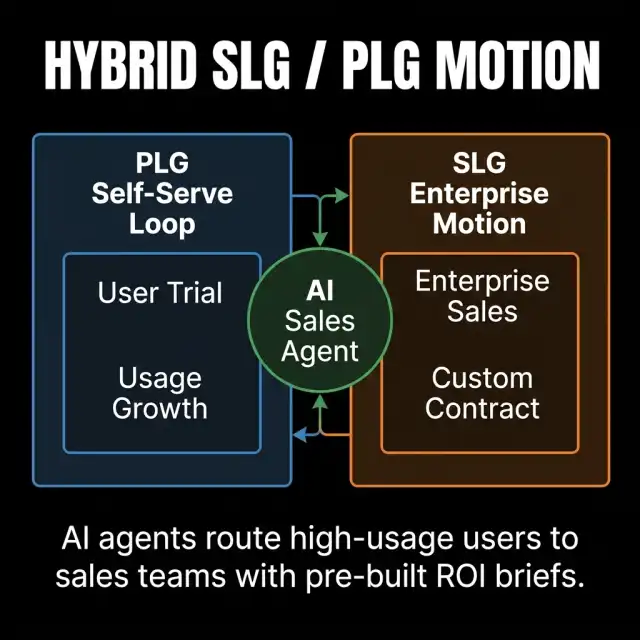
Productboard Spark clearly demarcates the Discovery Layer from the Delivery Layer:
- Discovery Layer (Productboard Spark): What to build, why to build it, customer signal validation, and technical feasibility scoping.
- Delivery Layer (Jira / Linear / GitHub): Task breakdown, sprint allocation, code commit tracking, and deployment verification.
Comparison: Traditional PM Tooling vs. Agentic Product System
| Dimension | Traditional PM Tools | Productboard Spark (2026) |
|---|---|---|
| Feedback Ingestion | Manual tag assignment & copy-paste | Autonomous 24/7 VoC agent clustering |
| PRD Creation | Manual drafting (4-8 hours per spec) | Agent-generated in minutes (Codebase-grounded) |
| Developer Alignment | Static document handoff | Bi-directional MCP integration with Linear & Jira |
FAQ
Does Productboard Spark replace product managers?
No. Spark automates background research, feedback ingestion, and spec drafting so product managers can focus on strategic positioning, customer interviews, and executive alignment.
How does Spark connect to engineering tools?
Spark uses Model Context Protocol (MCP) servers to securely read codebase schemas from GitHub/GitLab and export finalized specs directly to Jira or Linear.
Is customer data safe when ingested by Spark agents?
Yes. Productboard Spark enforces enterprise zero-retention policies, SOC 2 Type II compliance, and local tenant data isolation.
About the Author
Conclusion
Productboard Spark brings autonomous agentic execution to the product management discipline. By connecting customer signals directly to codebase-grounded PRDs via MCP, Spark redefines how modern product teams plan, prioritize, and deliver software.
For related insights, explore our coverage of Atlassian Rovo MCP integration and reengineering the project manager role for the AI era.
